‏إظهار الرسائل ذات التسميات No2Rouhani. إظهار كافة الرسائل

الأربعاء، 27 سبتمبر 2017

ايران: تنفيذ حكم 80جلدة على ” ليلى بيات“


تم تنفيذ حكم بجلد 80ضربة على ليلى بيات في طهران في الساعة الحادية بعد الظهر الثلاثاء 19/أيلول –سبتمبر2017
كانت ليلا بيات اللاجئة التي أعادتها حكومة النرويجية في شهر مارس /آذار إلى إيران. إنها احتجزت في عام 2007مع 3من أصدقائها في ضيافة خصوصية حيث أدينت بجلد 80ضربة بسبب تعاطيهم المشروبات الكحولية .
جدير بالذكر أنه تم فصل ليلى بيات من إبنها الذي حالياً في 13عاماً من العمروأعيدت إلى إيران حيث كانت تحاول منذ آنذاك لتوقيف عقوقة الجلد ولكن أصبحت محاولاتها دون جدوى وفي نهاية المطاف تم إجراء هذا الحكم اللاإنساني .

الثلاثاء، 26 سبتمبر 2017

Iran: Over 12,000 women registered as victims of violence


The Coroner’s Office of Tehran, capital of Iran, declared that it has registered the names of 12,159 women as victims of violence in four months.
The public relations of the General Department of the Coroner’s Office of Tehran Province announced that in the four months since the beginning of the Persian New Year (March 21, 2017) until July 21, 2017, it has registered the names of 33,362 people, 12,159 of them women, who had referred to the forensic centers of Tehran province due to injuries they suffered in physical fights. (The state-run Mehr news agency – September 23, 2017)

الاثنين، 11 سبتمبر 2017

إحصائيات عالمية تكشف تفاقم أزمة الفقر في إيران


كشفت مؤسسة 'بورغن' غير الحكومية الأميركية، والتي تعنى بمكافحة الفقر في العالم، في إحصائية لها أن تزايد نسبة الفقر في إيران وصل إلى مستويات قياسية في ظل استشراء الفساد الحكومي وهيمنة الطغمة الحاكمة على ثروات البلاد.
يشار إلى أن مشروع 'بورغن' هو حملة تعمل على تحسين مستوى الفقر وتتشاور مع قادة الولايات المتحدة الأميركية وتشجعهم على إيجاد حلول لأزمة الفقر في العالم، على أن تقوم بتنفيذ إجراءات بهذا الشأن.
وتطرقت المقالة الافتتاحية للعدد الأخير من مجلة 'بورغن' إلى الفقر في إيران وكذلك من خلال عدد من المقالات منها ما كتبته الباحثة سارا دايموند تحت عنوان 'رفع العقوبات الاقتصادية لن يزيل أزمة الفقر عن إيران'.
كما كتب كورنل هولاند، أحد باحثي المؤسسة، مقالة بعنوان 'اللامساواة هي مفتاح الفقر في إيران'.
ورأت الدراسات والمقالات المنشورة أنه في الوقت الذي تصنف الولايات المتحدة إيران الدولة الأولى الراعية للإرهاب في العالم، لم نلحظ أي تعاطف عالمي مع الفقراء في طهران.
وبحسب الدراسات المقدمة، تشير إحصائيات العام 2015 إلى أن نسبة 70% من عدد سكان إيران هم من الفئات الفقيرة. كما تؤكد أن وجود هذه النسبة المرتفعة تدل على أن إيران من أكثر بلدان العالم فقراً.
وعلى سبيل المثال، تحتاج عائلة واحدة مكونة من أربعة أشخاص لمبلغ 400 دولار شهرياً لتأمين حاجاتهم الأساسية، لكن أغلب العوائل الإيرانية يعتاشون على دخل لا يتجاوز حوالي 200 دولار شهرياً.
وإذا ما تمت مقارنة الوضع المعيشي لهؤلاء مع العمال الفقراء في الصين يتضح أن وضع العمال في الصين أفضل بكثير، حيث يستلمون رواتب من النصف إلى ضعفين أعلى من العوائل الإيرانية.
مجاعة
وذكرت إحصائيات وزارة العمل والشؤون الاجتماعية الإيرانية أن هنالك أكثر من 12 مليون مواطن تحت خط الفقر، ويعانون من الفقر الغذائي أي المجاعة.
وترى مؤسسة 'بورغن' أنه بالرغم من امتلاك إيران احتياطي كبير من النفط والغاز، غير أن اللامساواة والاختلاف الطبقي الفاحش بين الفقراء والأغنياء في هذا البلد أدى إلى تزايد حدة الفقر، وهي حقيقة غير قابلة للإنكار.
وبحسب 'بورغن'، فإن أبناء وعوائل المسؤولين وأصحاب المناصب العليا في النظام الإيراني لهم علاقة مباشرة بأزمتي الفقر وعدم المساواة، إذ لديهم شبكة من العلاقات والمحسوبيات في البنوك والمؤسسات الاقتصادية والمالية ويقومون بنهب ثروات البلاد بشكل منظم.
الولي الفقيه خامنئي وحاشيته يستحوذون على ثروات البلاد
كذلك يستحوذ 5% فقط من سكان البلاد على منابع الثروة وهم من الفئة الحاكمة بدءاً من المرشد وحاشيته وحتى كبار المسؤولين وعوائلهم، في حين 95% من الشعب يعيشون في الفقر، حيث تقدر ثروة المرشد بحوالي 95 مليار دولار أميركي، وفق دراسات 'بورغن'.
وفي الوقت الذي يقضي هؤلاء الأغنياء عطلة نهاية الأسبوع في عواصم الغرب كباريس ولندن، يصارع أغلبية الشعب الإيراني الموت للحصول على قوت يومه، وفق 'بورغن'.
وفي ظل هذه الأوضاع وازدياد معدلات الفقر وتضاعف نسبة البطالة، وعدم تنفيذ روحاني لوعوده الإصلاحية حتى في ما يتعلق بزيادة الرواتب بنسبة ضئيلة، يبدو أنه ليس جديراً بالثقة، وفق نتائج هذه الدراسات.
وأفادت الأبحاث أن زيادة النفقات العسكرية تسببت بشكل أساسي في ازدياد نسبة الفقر في إيران.

الأحد، 27 أغسطس 2017

Vast protests, deplorable conditions of women nurses in Iran


The situation of nurses' employment and occupation in Iran merits attention.
According to the latest figures compiled on the number of protests taking place in Iran, an average of 20 protests take place in Iran every day. One of the sectors constantly staging protests are the nurses. Despite their heavy-duty involving a lot of work, pressure and harms, the majority of nurses in Iran do not have official employment. They work on temporary contracts. They are offered a small salary and even that small salary is not regularly paid.
The latest protest by nurses was in Boushehr on August 24, 2017, where they protested non-payment of eight months of their past due salaries. Women nurses in Semnan also staged protests on July 16 and 17, 2017, outside the Governor's Office in this city to demand 11 months of past due salaries. The nurses and staff of one of the hospitals in Yasouj also staged a protest on May 30, 2017, demanding six months of non-paid salary. Similar protests have been staged all across the country throughout the year.
The Vice-President of the Nursing Organization had to acknowledge that while nurses are forced to work overtime, their overtime fees had not been paid for between six to ten months.
Nurses are not paid while regime officials have admitted that in the past 1.5 years, at least 16 educated nurses between 25 and 45 years of age have died at their workplace due to pressure caused by working different shifts, leading to heart stroke and other fatal problems.
Five months earlier, the same official announced that 10 nurses had died at work. This means that in only five months, six nurses have died at the workplace due to pressure at work. It should be noted that the figures officially announced by Iranian officials have to be considered to be the minimum.
One of the vice-presidents of the Nursing Organization, Dr. Jaleh Ezzati, admitted that there is a shortage of nurses in hospitals. She said, “In Iran, every 15 patients have one nurse, while by the international standards every nurse has to attend to one or maximum of four patients.”
Another official acknowledged shortage of 100,000 nurses in the country.

According to some reports, there are at least 11,000 unemployed nurses in Iran. The President of the Nursing Organization has admitted that some 40,000 unemployed nurses have registered at the organization’s website who are not willing to continue their work due to lack of job security. The official pointed out that there is an increasing absence of government support for nurses, and they have to endure tremendous pressure at work while receiving small salaries.
The Vice-President of the Nursing Organization has also indicated that there is a wide gap in the salaries of nurses and doctors. “The difference in the salaries of a nurse and a doctor in 99 per cent of countries, is three folds at most. In Iran, however, the difference is 100 folds. We have even had payrolls that are 500 times greater than those of nurses.”
At the same time, the number of graduates of nursing is not small, but there are many who do not get employment licenses after graduation. This is why many nurses decide to migrate despite rampant shortage of nurses in the country.
Nevertheless, we see that instead of compensating for the shortage of nurses in hospitals, official employment of educated nurses, eliminating the wide gap between doctors and nurses’ salaries, paying benefits for harmful jobs, and issuing license for the employment of educated nurses, the Ministry of Health has offered a plan according to which hospitals with sufficient facilities are allowed to train nurses. The plan of the Ministry of Health for training nurses in the hospitals was first announced two years ago. On May 13, 2017, the ministry renewed the directive on this plan.
Instead of making nurses’ employment official to resolve the critical shortage of nurses in hospitals, the Health Ministry seeks to take advantage of untrained graduates as cheap labor forces, activists of the nursing community say. They say that thousands of nurses are working on unofficial contracts despite years of experience in this field and the Health Ministry plan will jeopardize their job security.
In addition, some experts believe that the plan will take back the nursing profession 50 years.

Iran’s nursing community staged nationwide protests on August 6, 2017, against the Health Ministry’s plan. The protesters in Tehran, Shiraz, Isfahan, Ahwaz, Bojnourd, and Hormuzgan called for termination of the plan which pursues to train nurses in hospitals against all academic standards. They said they will continue their protests until they reach their demands.
On the sideline of nurses’ conditions, the employment of nurses’ aides must also be noted. Presently, some 10,000 trained nurse’s aides have not been recruited and their employment remains undecided. They have high school diplomas and have paid 4 million toumans to do the year-long training course.
While the United Nations and the Commission on the Status of Women (CSW) has concentrated their 2017 agenda on elimination of discrimination against women’s economic, equal pay for equal work, closing the gap in participation in the job market, decent work for every woman, etc., the deplorable conditions of women nurses in Iran is cause for great concern and merits attention and solidarity on the part of the international community
.

الاثنين، 21 أغسطس 2017

الدماء المسفوكة نتيجة فتاوى الخميني


عبدالرحمن مهابادي: كاتب ومحلل سياسي
سجلت ذاكرة تاريخ إيران أنه في العصر الحاضر وطيلة حكم دكتاتورية محمد رضا شاه بهلوي الذي واجه عدة مرات انتفاضة قام بها الشعب الإيراني وكان آخرها 12/شباط-فبراير 1979والذي أدّى إلى القضاء على النظام، لم يصدر خميني أي فتوى للجهاد ضد نظام الشاه، إذ كان له مواقف مشتركة كثيرة في عدة نقاط معها سيما في حقوق النساء بل كان خلافه مع الشاه بسبب تمهيده لرعاية بعض الحقوق للنساء !!
فعليه عندما اغتصب دفة الحكم نتيجة سرقة ثورة الشعب الإيراني والإمدادت الغيبية ! ما فتئ أن بدأ بتشغيل ماكنة الفتاوى اللاإنسانية ضد الشعب لإكمال الجرائم التي لم ينجح الشاه خلال حكمه من ارتكابها بمختلف الأسباب وأولها صدور الفتوى ضد الأحرار وعلى رأسهم مجاهدي خلق وبالتالي على الشعب الكردي المضطهد في كردستان إيران حيث تستمر هذه الجرائم يومياً من قبل عناصر نظامه وتحت غطاء الإسلام والإصلاح والاعتدال بلاوقفة حتى يوم واحد.
كان يتوقع جميع أبناء الشعب الإيراني لينالوا حقوقهم المغتصبة بعد الإطاحة بنظام محمد رضا شاه بهلوي وبالأحرى الحريات ، لكن وبما أن بنيان نظام الخميني مبني على طرد الحريات وحقوق الشعب والذي أرغمه عليهم ، بدأ بإصدار الفتاوى المتتالية ليجعل ممارسات القمع وارتكاب المجازر في إطار ممنهج وقانوني كما شكل على ضوئها المؤسسات التي تتطلب تبريرها بالذات وبالأحرى المتبنية على اعتماد سياسة التفريق بين مختلف شرائح الشعب مثل الشيعة والسنة والعرب والعجم والمسلم والكافر والموحد والعلماني وما شابه ذلك لخلق الصراعات بينهم والاصطياد من الماء العكر في الداخل من جهة وإشعال فتيل الحرب اللاوطنية ضد الجيران من جهة أخرى ليبرر بها في قمع الحريات وعدم تلبية مطاليب الشعب .
وفي هذا النمط كان ينوي الخميني منذ البداية قمع المعارضين فرداً فرداً سيما مجاهدي خلق حتى آخر نفر وأبسط الأعضاء والأنصار، كما أيد هذه الحقيقة أخيراً الملا علي فلاحيان وزير مخابراته المجرم وأذعن به في تلفزيون النظام كما اعترف بأنه وحسب فتوى الخميني يجب إعدام جميع أعضاء مجاهدي خلق حتى الذي يوزع جريدتهم أو من يشتري لهم خبراً أو أبسط أفرادهم فما بالك في بقية أعضائهم .
نعم ، إن اعتراف هذا الوزير المجرم بجرائم هذا النظام وقبل كل شيئ نتيجة إعلان حراك المقاضاة وتطوره لمقاضاة متورطي سفك دماء شهداء وعلى رأسه ارتكاب مجزرة صيف عام1988 حيث أفشل هندسة انجاح إبراهيم رئيسي لإبرازه في الانتخابات الرئاسية الأخيرة من جهة ووضع نظام الملالي أمام أكبرتحد لا مفرله حتى آخر خطوات لإحالة خامنئي وأزلامه للمثول أمام العدالة لمقاضاتهم خاصة لارتكاب مجزرة عام 1988والتي تعتبر أكبر جريمة ضد الإنسانية بعد الحرب العالمية الأولى .
نعم وكان باستغلال نفس الفلسفة اللا إسلامية واللا إنسانية  تمكن الخميني استغلال عواطف الناس المذهبية واتهام الشعب الكردي بالانقسام والتجزئة أصدر فتوى يوم 19/آغسطس –آب 1979 أي بعد 6أشهر من سقوط الدكتاتورية السابقة أعلن حرباً شاملةً تحت شعار ” الجهاد على الكفار“ على الشعب الكردي وبالتالي أرسل عددا من الجلادين والسفاكين وعلى رأسهم الملا صادق خلخالي إلى محافظة كردستان حيث أقاموا فرق الموت بشنق الأهالي المساكين في عدد من القرى في جميع نقاط كردستان إضافة إلى ارتكاب المجازر وتشكيل المحاكم الصحراوية التي لا تطول أكثر من دقيقتين أو ثلاث دقائق وبالتالي شنق الأهالي أو رميهم بالرصاص… فويل للقاسية قلوبهم ..
نعم وقد سبق أن أعلن الخميني قبل يوم من هذه الجرائم في قم بأنه “ لو كنا نقوم بنصب أعمدة الشنق في ساحات المدن، ونقوم بإغلاق أصحاب الصحف المنحرفة (حسب تعبيره)بالقوة  ونقود أصحاب القلم منهم إلى غياهب السجون لما حدثت هذا الأحداث والوقائع…(جريدة كيهان 18/آغسطس –آب 1979).
وبهذا جاء على السلطة هذا النظام وكأي نظام استبدادي آخر الذي لا يرى بقائه إلا في قمع أي صرخة تحررية من الشعب فبدأ منذ البداية عداوته على الشعب الإيراني وبضمنه الشعب الكردي ومطالبهم العادلة كما تجاوزت خلال الأعوام التالية الحدود الإيرانية دعماً من المستبدين مثل نوري المالكي في العراق وبشار الأسد في سوريا ودعم وإسناد الجماعات الإرهابية مثل ” حزب الله “ والحوثيين و… ليتحول إلى التهديد الرئيس للمجتمع البشري في القرن المعاصر .
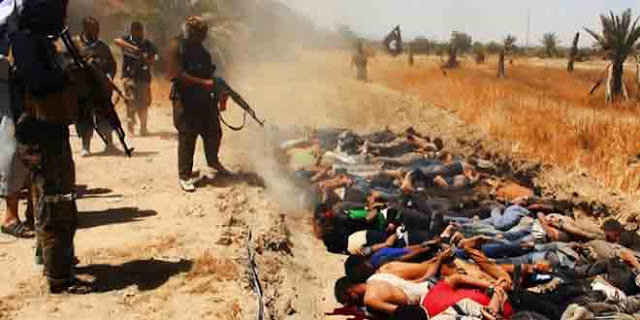
إن تطور واتساع نطاق حراك المقاضاة سيما خلال العام المنصرم خير دليل على بداية نهاية نظام بُني على الإعدام وارتكاب المجازروقمع الحريات. نظام لم يستطع جميع الأجهزة الحقوقيه والإنسانية وجميع الإدانات السنوية لكافة المؤسسات الإنسانية التابعة للأمم المتحدة عاجزة من إيقاف ماكنة القتل والمجازر لهذا النظام منذ صيف 1979في ارتكاب المجازر ضد الشعب الكردي المضطهد وارتكاب مجزرة عام 1988 ضد 30ألفاً من السجناء السياسيين حسب فتوى الخميني حتى صيف 2017بمواصلة الإعدامات والتعذيب والقتل والنهب ..
نعم ، حان الوقت لإحالة ملف جرائم هذا النظام حسب فتاوى الخميني اللاإنسانية و منفذيها وهم ضمن أعلى سلطات هذا النظام وفي أعلى مناصبه إلى المراجع الدولية لإجراء التحقيقات اللازمة حولها وتقديم متورطي هذه الجرائم أمام العدالة . لاشك أن هذا سيؤدي إلى حل جذري لأزمات المنطقة ويعتبر خطوة كبيرة تجاه استئصال هذه العصابات والجماعات الإرهابية في المنطقة برمتها .

ANALYSIS: Is this the beginning of a new era for Iraq without Iran?


The military phase of the fight against ISIS is winding down after the liberation of Mosul, and the battle for the nearby town of Tal Afar is predicted to end soon. This has provided an opportunity for Iraq to begin distancing itself from the influence gained by Iran following the disastrous 2003 war, and returning to its true Arabic heritage.
Iraq was known as a melting pot where Arabs, Kurds and Turkmens lived alongside and in mixed societies for centuries. Prior to Iran gaining its disastrous sway across Mesopotamia, this was a land where the majority of Shiites lived and prospered with their Sunni, Christian, Yazidi and all other religious minority brothers.
Has not the time arrived for Iraq to regain its true position as part of the Arab world, and rid its soil of the meddling of Iran’s clerics?

Long-awaited developments

Iraqi officials have embarked on a new campaign of visiting Saudi Arabia and other Arab Sunni states, signaling long-welcomed changes. The influential Sadrist leader Muqtada was seen in the final days of July meeting with Saudi Crown Prince Mohamed bin Salman.
Only days later Sadr paid a visit to the United Arab Emirates, another critic of Iran’s policies, where he was welcomed as an Iraqi leader by a slate of leading politicians and clerics.
Sadr’s visit rendered a variety of measures by Riyadh, including launching a Saudi Consulate in Sadr’s hometown of Najaf, one of the two holiest Shiite cities in Iraq. Grand Ayatollah Ali al-Sistani, known as Iraq’s most senior Shiite cleric, his distance from Tehran’s viewpoints and calling for Iraq to practice openness in establishing relations, did not block such a proposition
Iran, however, resorted to strong remarks against Sadr for his visits to Saudi Arabia and the UAE. The visit was even described by a local wire as an act of betrayal to the Houthis in Yemen.
Iran’s support for the Shiite proxy militias, through arms, logistics and finances, parallel to advisors dispatched by the Revolutionary Guards (IRGC) and Lebanese Hezbollah, have resulted in the humanitarian catastrophe Yemen finds itself today.
Sadr is also planning a visit to Egypt, adding to the list of senior Iraqi officials, including Prime Minister Haider al-Abadi and the ministers of foreign affairs, interior, oil and transportation who are set to visit Saudi Arabia. Despite investing in Iraq for the past 14 years, Iran has been deprived of visits of such high stature.

No future

Iran’s proxies, while taking the credit for much of the fight against ISIS on the ground, have been accused of law violations and refusing to obey the state of Iraq. Iraqi authorities affiliated to Iran have a very poor report card of being involved in corruption and sacrificing Iraqi national interest in Tehran’s favor.
This became a major issue during the second term of former Iraqi prime minister Nouri al-Maliki, who some have even described as Iran’s “puppet.” Maliki is known to have close relations with Tehran and Iranian Supreme Leader Ali Khamenei himself.
To make matters even worse, the recent departure of Majid al-Nasrawi, governor of the oil-rich city of Basra located at the southern tip of Iraq, has recently left for Iran. His departure followed being accused of numerous corruption offences by a government transparency committee. Choosing Iran as a destination has left further impression of him fleeing to a safe haven, and Tehran having a hand in Iraqi corruption.

Rebuilding cities

As Sadr and other Iraqi officials continue their meetings with senior Arab officials of the region, there are also major talks under way between Baghdad and Riyadh to establish a new alliance that would provide Saudi Arabia a leading role in rebuilding war-torn cities across Iraq.
On August 14th the Cabinet of Saudi Arabia announced a coordination committee to spearhead a variety of health care and humanitarian projects, including building hospitals in Baghdad and Basra, and providing fellowships to Iraqi students in Saudi universities. Opening border crossings and establishing free trade areas between the two countries is also on the agenda.
Riyadh should lead the Arab world in tipping the balance of power against Tehran’s interests in Iraq. The truth is Iran has not carried out any major economic project in Iraq from 2003 onward, due to the fact that the mullahs do not seek the prosperity of their western neighbor.
Saudi Arabia and the Arab world should provide the support Iraq needs after suffering from Iran’s menacing influence that has brought nothing but death and destruction. Evicting Iran from Iraq must come parallel to efforts of ending its presence in Lebanon, Syria and Yemen.
The main obstacle before the Arab world in establishing a coalition against Iran’s clerics is this regime’s meddling and the IRGC presence across the region. With Iran evicted from Iraq, the void should be filled by economic support by the Arab world for Iraq.
And with the US Congress adopting a bill against the IRGC, Riyadh must take the lead to have all IRGC members, proxies and Iran-related elements expelled from the region. Only such a policy will allow the Middle East to one day experience tranquility and peaceful coexistence.

August 2017 Conference Commemorates 1988 massacre of Iranian political prisoners

الثلاثاء، 15 أغسطس 2017

IRANIAN REGIME CRACKS DOWN ON MEK/PMOI


The growing movement calling for justice for the 1988 massacre of 30,000 political prisoners in Iran, has provoked the Iranian regime to attempt to discredit the movement.State-run Basij News recently wrote, “The People’s Mojahedin of Iran (MEK/PMOI) has organized the maximum propaganda and military activities against the Islamic Republic of Iran.
The unresolved issue is how some of the political circles support the MEK’s measures in the current situation and they question the events of the 80s, while trying to call the hangman a martyr.”
Leadership of the regime have criticized France for hosting the National Council of Resistance of Iran ( NCRI)’s annual “Free Iran” event. At “The Islamic Human Rights’ Conference”, Foad Eezadi stated, “France hosts Iran’s enemies, whereas it established economic relations with Iran after the Joint Comprehensive Plan of Action (JCPOA).” He added, “We had a lot of sanctions before the Iran Nuclear Deal. However, the question is that who is left out sanctions after this deal? According to this law, even the President could be sanctioned. The U.S. has enlisted us as the enemy country. Consequently, it doesn’t make much of a difference to give or not to give concessions as long as we are on this list.”
By discrediting the MEK, the regime hopes to discredit the movement. The MEK is seen as the foundation of the protests and domestic uprisings within Iran. The regime wants to confront the MEK, arguing that the regime’s unwillingness to discuss the massacre gives the MEK a foothold with the youth and others, because of the questions they raise.
Mohammad Sadeq Koushki, an international affairs expert in Iran, said, “We should have given people as much information about the MEK that there was no ambiguity about the executions in 1988.”
It appears that the regime is not able to obstruct the popular position of the MEK with the younger generation, although the state-run media, and lobbyists in the international community continue to try. The regime promotes outright suppression of the group. Even with these efforts, the MEK/PMOI continue their focus on the rights of the Iranian people and advocate for human rights and the freedom to express political opinions.
Films made about the MEK must reflect the views of the regime. Historically accurate films cause the filmmaker to be accused of being a supporter of the MEK. A filmmaker was quoted as saying, “Many people, even at the government level, go along with these deceptive slogans.”
The MEK/PMOI questions the actions of the Iranian regime. Their network within the country has exposed the actions of the regime to the international community.
Besides the MEK/PMOI, others who oppose the regime have built a coalition known as the National Council of Resistance of Iran (NCRI), which is the democratic alternative to the fundamentalism of the regime. They have developed a 10-Point Plan for building a free, non-nuclear, and democratic country to replace the regime’s fundamentalism and exporting of terrorism.

الاثنين، 14 أغسطس 2017

NEW SANCTIONS ON IRAN, NOW IT'S TIME FOR A NEW US POLICY TOO


By Alireza Jafarzadeh
On the second anniversary of the Joint Comprehensive Plan of Action (JCPOA), or the Iran nuclear deal, some argue that the agreement succeeded in slowing Iran’s progress toward a nuclear weapon. However, the restrictions on the Iranian nuclear program are only limited, as is the international inspectors’ access to the country’s illicit facilities.In addition, in areas unrelated to the nuclear agreement,
the Iranian regime’s behavior has only gotten worse over the past two years. The Islamic Revolutionary Guard Corps (IRGC), has escalated its nefarious activities in Syria, Iraq, and Yemen, has deliberately sought out close encounters with American warships, and has boasted of new Iranian military equipment.
Three ways to find the real deals on Amazon
Here’s some trivia for you: Amazon, the largest and most versatile…
 The White House’s efforts to enforce a harder line on Iran policy is well justified and the president’s signing into law of H.R. 3364, which included a title, “Countering Iran’s Destabilizing Activities Act of 2017” is a step in the right direction.
In June, the National Council of Resistance of Iran revealed details of the escalation of the Iranian missile program, proving the nuclear threat to be real. The opposition coalition identified more than 40 sites for missile development, manufacturing, and testing, all of which were under the control of the IRGC. What’s more, at least one of those sites was known to be collaborating with the Organization of Defensive Innovation and Research, known by its Farsi acronym SPND, the institution tasked with weaponization activities related to the Iranian nuclear weapons program. SPND activities have continued since the JDPOA.
Such revelations clarified what should already be common knowledge: Iran’s nuclear weapons activities have continued. Even worse, myopic focus on the nuclear issues has distracted attention from the Iranian regime’s terrorism sponsorship, regional intervention, and human rights abuses.
If the IRGC continues to acquire more wealth through its large-scale control of the de-sanctioned Iranian economy, combined with continued lack of access to the nuclear sites of SPND, Iran will undoubtedly deliver a nuclear weapon.
To its credit, the US. has taken steps toward addressing the underlying problem of the IRGC’s expanding control over Iranian affairs. Soon after taking office, Mr. Trump urged the administration to review designating the IRGC as a terrorist organization. With the new Iran sanctions bill now signed into law, the administration should expand all anti-terror sanctions to the whole of the IRGC, including its affiliate entities and associated financial and economic arms.
This is a meaningful start to a new Iran policy that is comprehensive in its aims and in its enforcement. Toward that end, the US should work with the UN and EU to evict the IRCG from the combat zones in Syria, Iraq, and Yemen. This will help protect the West and its allies, as well as empower the Iranian people, who are seeking regime change and are more than capable of bringing it about on their own.
Without serious sacrifice, Western powers must do their part. The Iranian regime must be more isolated and financially handicapped by the United States. It must also be subject to pressure not just over its nuclear program but also over a range of current and past crimes, including illicit missile testing, escalating regional and sectarian conflicts in the Middle East, and the 1988 massacre of political prisoners. The United States should subject all major human rights violators of the Iranian regime, including dozens involved in the horrific 1988 massacre of 30,000 political prisoners. Many of the perpetrators of this crime currently hold key positions in the Iranian regime.
These pressures will make a profound difference in the future of Iran, if coupled with reaching out to the people of Iran and their organized opposition. They will succeed in diminishing the power and influence of the IRGC; bolster the Iranian people and the prospect of the emergence of a truly democratic Iranian government. 
Alireza Jafarzadeh, the deputy director of the Washington office of the National Council of Resistance of Iran, is credited with exposing Iranian nuclear sites in Natanz and Arak in 2002, triggering International Atomic Energy Agency inspections. He is the author of "The Iran Threat" (Palgrave MacMillan: 2008). His email is Jafarzadeh@ncrius.org , and is on twitter @A_Jafarzadeh.
originally published in the   foxnews

السبت، 12 أغسطس 2017

CALLS FOR JUSTICE AND ACCOUNTABILITY FOR THE 1988 MASSACRE LEAD TO CRACKDOWN ON MEK/PMOI


As the movement for calling for justice in regards to the 1988 massacre of 30,000 political prisoners grows, the Iranian regime is fighting back in an attempt to discredit the movement. Recently, the state-run Basij News wrote, “The People’s Mojahedin of Iran (MEK/PMOI) has organized the maximum propaganda and military activities against the Islamic Republic of Iran. The unresolved issue is how some of the political circles support the MEK’s measures in the current situation and they question the events of the 80s, while trying to call the hangman a martyr.”
Various members of the leadership of the regime have also spoken out against France for hosting the National Council of Resistance of Iran (NCRI) annual event. “France hosts Iran’s enemies, whereas it established economic relations with Iran after the Joint Comprehensive Plan of Action (JCPOA),” said Foad Yazidi at a meeting entitled “The Islamic Human Rights’ Conference”.

He also noted, “We had a lot of sanctions before the Iran Nuclear Deal. However, the question is that who is left out sanctions after this deal? According to this law, even the President could be sanctioned. The U.S. has enlisted us as the enemy country. Consequently, it doesn’t make much of a difference to give or not to give concessions as long as we are on this list.”
The focus of the regime has been to discredit the movement by discrediting the MEK, which is seen as the backbone of the protests and domestic uprisings within Iran. Members of the regime argue that the state needs to confront the MEK, versus brushing them under the rug. Many argue that the regime’s unwillingness to talk about the massacre has given the MEK a foothold with the youth and others, because of the questions they are able to raise.
“We should have given people as much information about the MEK that there was no ambiguity about the executions in 1988,” said Mohammad Sadeq Koushki, an international affairs expert in Iran.
The regime seems unable to stop or derail the popular position of the MEK with the younger generation in Iran, despite all the efforts through the state-run media, lobbyists in the international community, and outright suppression of the group. Throughout these efforts, the MEK/PMOI have continued to focus on the rights of the Iranian people and advocate for human rights and the freedom to express a political opinion that is not in agreement with the regime.

Even within the regime, there is talk about how films about the MEK must reflect the views of the regime. If they are historically accurate, then the filmmaker must be a supporter of the MEK. One filmmaker was quoted as saying, “Many people, even at the government level, go along with these deceptive slogans.”
The MEK/PMOI has been a voice of political opposition, questioning the actions of the Iranian regime. Working with their network within the country, they have exposed the actions of the regime to the international community, making it clear that the regime can’t be trusted.

In addition to the MEK/PMOI, other voices in opposition to the regime have built a coalition, known as the NCRI. This group has become the democratic alternative to the fundamentalism of the regime. Their 10-Point Plan is the basis for building a free, non-nuclear, and democratic country in place of the fundamentalism and exporting of terrorism that is the regime’s bread and butter.

Tortured by 'Moderates'


Hassan Rouhani was sworn in for his second term as president of Iran on August 5, surrounded by fresh flowers, fervent followers, and around 500 foreign officials. Representatives of the United Kingdom, France, the United Nations, and the Vatican rubbed shoulders with the Syrian prime minister, Hezbollah second-in-command Naim Qassem, Palestinian Islamic Jihad leader and FBI Most Wanted Terrorists list member Ramadan Abdullah Shallah, and murderous Zimbabwean dictator Robert Mugabe. The Westerners didn’t seem uncomfortable in such company; indeed, European Union foreign policy chief Federica Mogherini was described as the star of the show after Iranian members of parliament elbowed through the crowd to take selfies with the diplomat.
But why should they have been bothered? They were in Tehran, after all, to celebrate the renewed rule of a man who has overseen a steady increase in killings—Iran has the world’s highest per capita execution rate. Three days before Rouhani’s inauguration, Amnesty International released a damning report on conditions in the country: “Iran’s judicial and security bodies have waged a vicious crackdown against human rights defenders since Hassan Rouhani became president in 2013, demonizing and imprisoning activists who dare to stand up for people’s rights.” The press release capping Mogherini’s visit didn’t mention the European-based organization’s report—or human rights issues at all—instead focusing on “the EU’s unwavering commitment to” the Joint Comprehensive Plan of Action nuclear deal. It’s unlikely Mogherini brought up the subject even in her private meetings: She was pictured smiling in multiple photo-ops with government officials.
A month earlier, a young Iranian woman told me how she and her fellow reformers feel when they see such images. “We know with every negotiation with this regime, every shaking hand with this regime, it means one more gallows in the streets,” Shabnam Madadzadeh said sadly. “They close their eyes to human rights in Iran,” she said of Westerners who deal with the regime and many members of the media who report on it. “They kill humanity, in themselves firstly, and after that in Iran.”
Madadzadeh speaks with a seriousness that belies her age. In a hound’s-tooth blazer, black pants, glasses with wine-colored frames, and a headscarf in shades of deep rose, the 29-year-old unfurled her passion in complete paragraphs. Her mustachioed and bespectacled 32-year-old brother, Farzad, wore a black suit and white shirt, sans tie. Intense but friendly, he continued his sister’s thought: “The biggest mistake that anybody can make when looking at Iran is to distinguish between Rouhani and [Supreme Leader Ali] Khamenei. If you just look at the law related to the elections in Iran, nobody can become president of Iran unless Khamenei has endorsed them. So whatever differences they have on one thing, they are united maintaining this regime, keeping it in power at any cost.”
It’s no surprise the pair project a certain depth. Shabnam and Farzad Madadzadeh spent five years as political prisoners in Iran. The siblings were tortured in front of each other and repeatedly threatened with execution. They fled the country: separately, illegally, dangerously. What is extraordinary is that after so lately enduring such horrors, never knowing if they’d make it out alive—and learning that many friends did not—they’re able not only to smile but laugh repeatedly in the course of a five-hour conversation. They were joined in the lobby of a Paris airport hotel by a fellow dissident, Arash Mohammadi. He had the same mustache as his countryman but wore a blue blazer, blue pants, and a blue checked shirt. He’s only 25 but can be as grave as the Madadzadehs. A jocularity comes through in his playful smile, however—even though he’s been jailed three times, enduring torture in each stint.
All three escaped from Iran recently: Shabnam less than a year ago, Arash about a year ago, and Farzad just under two years ago. And here they were, cracking up in mirth watching a YouTube video. They’d wanted me to see an example of the work of Mohsen, a comedian whose parodies make Pake Shadi the most popular program on a subversive satellite television network. He’s so famous in Iran that even prison interrogators mention his material. In this one, he inserted himself into state television footage of the funeral earlier this year of former Iranian president Hashemi Rafsanjani. Khamenei watches as Mohsen leads the crowd in a chant of mourning. In the front row, top regime officials—notorious thugs such as Islamic Revolutionary Guard Corps commander Mohammad Ali Jafari and Quds Force leader Qassem Suleimani—play up their grief for the camera. Mohsen intones, “Hashemi is waiting for us; let’s go” .  .  . to hell. The comedian notes that Rafsanjani, as a founder of the Islamic Republic, was buried next to longtime supreme leader Ruhollah Khomeini: “Now it is Khamenei’s turn!” In between laughs, the Iranians explain just how provocative the video is. “So in the middle of the mourning ritual, he starts dancing like that. It’s ripping all the taboos,” said Hanif Jazayeri, the men’s translator. “And this means that Hashemi is waiting for Rouhani,” added Shabnam, who speaks fluent English.
The video is a high-quality production and YouTube offers an English translation. But Westerners might need explication anyway: Rafsanjani and Rouhani are regularly referred to in the West, by politicians and the press, as “moderates.” The Iranians find that notion almost as hilarious as Mohsen’s satire. I read them a line from the recent election analysis of a major American newspaper: “Many Iranians gravitate toward Mr. Rouhani because of his relatively tolerant views on freedom of expression.” All three laughed heartily. But the talk soon turned serious.
“If there was freedom of expression in Iran, what are we three doing here? I mean, leaving behind your family is not easy, you know? We had to leave our university, our family, our best friends,” Arash said. When they do talk to people back home, they do so very carefully—contact with escaped dissidents could mean imprisonment for their friends and family. The trio did not want the exact dates of their escapes published, nor the location of their current homes, other than that they’re in Europe. The siblings don’t even live in the same city, for security reasons.
Iranian foreign minister Javad Zarif declared in a 2015 interview with Charlie Rose, “We do not jail people for their opinions. The government has a plan to improve, enhance human rights in the country, as every government should.” The PBS interviewer did not question these claims. Neither did the many friendly—almost gushing—reporters Zarif spoke with on his visit to the United States last month. Arash Mohammadi and Shabnam and Farzad Madadzadeh provide more evidence—if any is needed—that such statements are simply lies.
Shabnam and Farzad were arrested in 2009, before the uprisings over the suspicious reelection results of President Mahmoud Ahmadinejad that would turn into the Green Movement. They were seized on the street. Their family, not knowing what had happened, called hospitals to see if they’d been in an accident and searched for the pair for months. Shabnam was studying computer science at Tehran’s Tarbiat Moalem University and was a leader in the reformist student group Tahkim-e Vahdat. Farzad was a nonviolent activist and supporter of the resistance group People’s Mojahedin Organization of Iran (PMOI), best known in the West for revealing details of the regime’s theretofore hidden nuclear program. “I was 23 when I was arrested, and the torture started then,” Farzad recounted. He and his sister were held separately in solitary confinement for months. Questioning would begin around 8 a.m. and last 12 to 14 hours. “In each of the interrogation sessions, I was beaten. They wanted me to confess to crimes that I had not committed,” Farzad said. They wanted him to publicly renounce the PMOI (also called Mujahedin-e Khalq, or MEK) and the National Council of Resistance of Iran. “They told me, ‘You come and do an interview against the PMOI, the MEK, and the NCRI,’ ” he said. “They would throw me on the ground and treat me like a football between three people. .  .  . Several times they did this to me in front of Shabnam’s eyes in order to break her.”
His sister will never forget her own months in solitary confinement. “The interrogator told me, ‘Okay, nobody can hear you. We are alone here, and we can do everything we want.’ ” She could regularly hear the voices of other prisoners being tortured; some later told her they had been raped. She was tortured herself, and the only time she could see her brother was when they brought him to be tortured in front of her. Even after she left solitary confinement, she was often deprived of the few visits allowed with family because she told them about the appalling conditions of the prisons and the gruesome treatment of prisoners. Four people would share a cell, with three thin blankets each to sleep on; windows would be left open even in winter. Captives were taken to use the bathroom just three times a day, and not at times of their choosing. Having to hold it in gave Shabnam serious medical problems. “About 11 months to a year after our arrest, there was a trial. For five minutes, it lasted,” Farzad said. They were both given five-year sentences and moved from Evin Prison to the even harsher Gohardasht Prison.
“Many of my friends during this period that I was in prison, they were executed. Some of them, they died in front of my eyes because of the illnesses they had or because they were tortured so much and because of their conditions they died in front of me,” Farzad reported. He can rattle off the names of friends executed after death sentences. “Ali Saremi. Jafar Kazemi. Mamadali Hojari. Farzad Kamangar. Farhad Vakili.” Mohsen Dokmechi died of pancreatic cancer after jailers refused him medical treatment.
He expected the same fate. “I remember the moment that I was arrested, taken to the car, and I was in front of the door of Ward 209 of Evin. I told myself, ‘You’re going in here, but you’re not coming out of here.’ Because I knew where I had come. Because I had heard what happens here.”
While the siblings each served one long sentence, Arash had multiple shorter stints in prison: He was arrested twice under President Ahmadinejad and once under President Rouhani. He was a 19-year-old studying industrial management at Tabriz University when he started gathering with other students concerned about the plight of workers in the country, especially children (factory work can start at ages as young as 6 or 7, and drug addiction with it). “If somebody just goes and walks down the streets for 10 minutes, maybe they would see a hundred kids working on the streets,” Arash said. Besides toiling in factories, children sell small items: chewing gum, socks, even “luck poems,” often randomly chosen excerpts from the work of 14th-century Persian poet Hafez. “If they don’t work, they will be starving,” Arash said. “When the government rounds them up and arrests them, instead of assisting them, helping them with their problems, they take them” to juvenile correction facilities, where the conditions can be worse than on the streets. “They are even raped there, in those centers.” He knows of a 9-year-old girl who worked in a sewing factory who underwent such trauma.
“The main problem is that the Iranian government actually doesn’t even acknowledge that such a problem exists,” Arash said. Calling attention to it was an implicit criticism of the government. “Although we were campaigning for children’s rights or worker’s rights, they would charge us for things like insulting the supreme leader, insulting the sanctities, and things that nowhere in the world is a charge,” he said. “Because the Iranian regime, they want to say that this is the best place on earth. Neither during our time in prison, neither now, the regime does not accept that it has political prisoners.” Arash was taken from his home at 5 a.m. “They told my family, ‘We have to speak to him for about an hour, then he’ll come back.’ ” He spent a couple of weeks in solitary confinement and was sentenced to a year in prison. “They constantly brought a paper in front of us and said, ‘Either you have to answer these questions like this, or you’re going to be executed.’ ”
He was next arrested after trying to aid victims of the 2012 earthquakes in the Iranian province of Azerbaijan. “The government didn’t want people to know what had happened there,” Arash said. It wasn’t the natural disaster the regime was trying to hide. “There were a number of villages that didn’t have even the basic of facilities like electricity, water,” he reported. “The IRGC, the Revolutionary Guards, had come there and they had closed off the routes to the villages.” Dozens of people were arrested for trying to help victims and locate survivors trapped under the rubble.
“The primary thing of importance for the regime is for the people not to become alert as to the problems that exist there. That’s their number-one priority,” Arash said. “It’s 100 percent a danger as a threat to the regime because it’ll become clear that for 38, 39 years, this government has done nothing for the people.”
Arash was detained yet again the day after Rouhani was announced the winner of the 2013 presidential race. “During his election and campaigning, he had promised to free all political prisoners. And so as soon as it was announced, we went in front of his campaign headquarters, and we started to chant, ‘All political prisoners must be freed,’ ” Arash said. He quickly became one himself.
That third stint in prison was the final straw. He realized that if he didn’t leave the country, he’d eventually be sentenced to death. Farzad and Shabnam also made the difficult decision to flee. “When I was released from prison, immediately a lot of problems started to come about, and I was being followed and being monitored,” Farzad said. “I couldn’t work. I couldn’t get by, live.”
Shabnam had the same experience. “When I was released, they didn’t allow me to continue my studies. They didn’t allow me to have a job.” She still worries about her female friends, especially, “under the clutches of the misogynistic regime.”
Recalling why he left his homeland reminded Arash why he started fighting for its freedom in the first place.

We are some youth, and naturally no youth want to see hardship. The youth of Iran are just like the youth in America and Europe. They want the same things. But when we reached a certain age, we looked around us and we saw that there are some things are happening, and people are being killed in the streets. People are being hanged in the streets. We also knew that in this regime, for the past 38 years there has been a current, a faction, that constantly says, “We’re reformists, we’re reformists.” But we saw that there was no reform. So we realized that the dictatorship needs to be overthrown.
And that is the heart of the matter: Western diplomats may pretend otherwise, but the government over which Hassan Rouhani presides is a dictatorship.
“As far as I’m concerned, you can’t say that one dictator is better than another dictator,” Arash said. “I was lashed in prison. For me, it did not make a difference which government’s agents were lashing me. But the pain of the lashes by Rouhani’s government were for me more painful. Because during the Ahmadinejad administration, everybody accepted it: Ahmadinejad was a dictator. But during Rouhani’s time, I felt, I saw these lashes on me, but the West did not accept that was going on. So it was much more painful for me.”
Of course, the West also sometimes found it convenient to pretend that Ahmadinejad was no dictator. Farzad recalled being in prison in 2009 when an influx of inmates arrived. Arrested supporters of the fledging Green Movement told him of their cries: “Obama, Obama, are you with them or with us?” “In Farsi, this rhymes, so it was a slogan that was chanted in the streets. But what did Obama do? Obama secretly brought a letter to Khamenei. .  .  . This was while people were being killed in the streets,” Farzad said. “The policy of appeasement exists. Because some people have vested interests.”
That is a succinct summary of what Iranian freedom fighters would like from the West: an end to the policy of appeasement. “I interpret the Iranian regime like a statue, like this bottle here,” Arash said, grabbing a one-liter glass bottle of Pellegrino on the table. “I believe the foundation of this regime has been destroyed by the resistance.” He made a digging motion underneath the bottle with one hand; with the other, he started shaking the bottle back and forth slightly. (It seemed a particularly Persian analogy: Engineering rivals poetry in popularity in Iran.) He has seen the cracks himself, giving the example of conversations in taxicabs. In Iran, no one has enough money to ride alone. “When there are two, three people in a car, they are so aggravated by the regime that they start to curse,” he said. (He was too polite to report exact wording.)
Back to the bottle: “But from the top, the appeasing governments in the West have tied a string to it to not let it fall down and shatter. So 100 percent, those who are holding onto this string and keeping it there are responsible for their role in it.” He is quick to point out that it’s not just Iranians such a policy hurts. “For example, when Rafsanjani was president and Rouhani was the secretary of the Supreme National Security Council, the West kept on saying that this government is a moderate government. But it was the same government that went into Argentina and exploded the Jewish center. So this shows that when this regime is appeased, it does not just cause suffering for the Iranian people. This evilness is exported.”
They point to the Joint Comprehensive Plan of Action nuclear deal the West signed with Iran in 2015 as a prime example. “This agreement, it gave far more concessions than were necessary to this regime. They put the money—cash—in an airplane. They sent it to Iran,” Farzad pointed out. “None of that money reached the Iranian people. It reached Assad, Hezbollah.” The Iranian government received $1.7 billion directly through the deal. It will see billions more through deals the agreement has made possible: Boeing, Airbus, Renault, Total S.A., and Siemens AG are just some of the American and European companies lined up to do business with the mullahs.
That agreement was the prime focus of President Obama’s foreign policy and the reason he wrote private letters to the supreme leader, but of course Donald Trump is in power now. The three dissidents were in Paris in July for an annual gathering of members and supporters of the National Council of Resistance of Iran. Well over 100,000 people filled a stadium near Charles de Gaulle airport to listen to speakers from all over the world, including some Americans: former U.N. ambassador John Bolton, former senator and vice presidential candidate Joseph Lieberman, and Trump confidant Newt Gingrich. Throughout the weekend in Paris, from activists and their supporters alike, rang a refrain not often heard in Washington: optimism about the Trump administration. Most people were quick to note that they don’t support all or even many of the president’s policies. But they saw his tough talk about the nuclear deal during the election as a sign his Iran policy would be very different from his predecessor’s—perhaps even a “180-degree” turn, more than one person said.
The administration is conducting a review of Iran policy, which it plans to finish by summer’s end. Some pundits worry that it will make “regime change” the new goal of the United States. That’s precisely what these Iranian dissidents are hoping for. But, contrary to the assumptions of some supposed experts in Washington, “regime change” doesn’t have to be by military force.
When asked if they’d like to see America crush the Islamic Republic using bombs and tanks, all three immediately shook their heads and emphatically said no. Iranians can overthrow the theocracy from within, they insist—if the West ends the aid and comfort that allow it to hold onto power. “Definitely we have requests. We request that the West stop supporting this dictatorship,” Arash concluded. “Based on the tally that this regime has given, every day approximately three people are hanged in Iran. So for every extra day that this regime is in power, more blood is spilled in Iran. So if the U.S., and the West in general but in particular the U.S., retracts the support that they have given this regime, definitely both the people of Iran will achieve freedom sooner and fewer lives will be lost.”
All they’re asking, in other words, is that the West let go of the string that’s holding up the teetering regime.
Kelly Jane Torrance, deputy managing editor of The Weekly Standard, traveled to Paris as a guest of the Alliance for Public Awareness, apa-ice.org.

ماذا يفعل النظام الإيراني في العراق؟

تم التحديث:  11:18 03/11/2017 AST مشاركة تغريدة Email تعليق الحرس الإيراني بقناع الحشد الشع...