الأحد، 6 أغسطس 2017

Failed Attempts of Iran Regime Against MEK


London, 2 Aug - Mere hours before the Iranian Resistance’s annual Free Iran gathering began in Paris, the Iranian Regime’s foreign minister, Javad Zarif, visited France in order to ban the gathering.
He failed. Over 100,000 people turned up to support the Iranian people’s call for freedom.
Three weeks later, Iran’s Supreme Leader Ali Khamenei sent his close relative and advisor, Kamal Kharrazi, who was involved in a failed 2003 plot to discredit the resistance group the People's Mojahedin Organization of Iran (MEK/PMOI), to denounce the MEK/PMOI as "a terrorist group that murdered thousands of ordinary citizens in Iran".
This is, of course, a complete lie, but when your daily activities include running a terrorist training camp, murdering political prisoners, and illegally continuing work on your nuclear programme, what’s a little lying?
These are clear attempts to discredit the MEK/PMOI because the Regime doesn’t like that the MEK/PMOI is providing evidence about the massacre of 30,000 political prisoners in 1988. However, while the MEK/PMOI is well respected in France and around the world, the Regime should be grateful not to be on trial for crimes against humanity yet.
The Regime is angry because the PMOI/MEK and other resistance groups have called for the Iranian Revolutionary Guard Corps (IRGC) to blacklist for their clear links to terrorism, criticised the treatment of political prisoners along with Amnesty International and the UN, and called for the Regime to stop interfering in the affairs of other states in the Middle East.
The National Council of Resistance of Iran (NCRI) has released a statement advising the French Government and the international community to see these fabricated claims are merely the actions of a despotic regime that is losing power.
The NCRI wrote: “According to reports obtained from inside the regime, the Supreme National Security Council of the mullahs discussed, in the presence of the Foreign and Intelligence Ministers (MOIS), new schemes to fabricate new files against PMOI and handing them over to the French judiciary.”
The NCRI detailed 12 instances in which the Regime has tried to pull off this same type of attack in the past.
The statement read: “The Iranian Resistance warns against new machinations and new conspiracies of the mullahs' crisis-ridden regime against the Iranian people and the Resistance, and calls on the French government and the French judiciary to be vigilant in staying firm in the face of these illegal acts and not to allow French judiciary to be once again instrumentalised by the religious fascism ruling Iran.”
The Iranian Regime is terrified of its own people and their organised, democratic, resistance and for good reason. Tides are turning on Iran and the appeasement policy is waning; soon the people will take control.

Trump sanctions set stage for necessary regime change in Iran


With the president’s signature on H.R. 3364, formally known as the Countering America's Adversaries Through Sanctions Act of 2017, the Trump administration — eager for legislative accomplishments in the wake of the GOP failure to repeal the Affordable Care Act — can take credit for turning the page on failed Obama-era policy toward the Islamic Republic of Iran. 
The bipartisan passage of the long-anticipated sanctions bill by both houses of Congress allows the administration to take aim at rogue regimes in Iran, Russia and North Korea. Disagreements over U.S. policy toward Russia notwithstanding, the White House can be confident that legislators overwhelmingly support confronting threats emanating from Iran and North Korea and are prepared for even stronger measures to curtail the influence of these dangerous regimes.
The White House should now build on the successful passage of sanctions legislation to push for regime change in Tehran as an appropriate next step.
Trump administration surrogates can remind the American people that the White House first put Tehran on notice for engaging in regional destabilization shortly after Trump took office, pursued comprehensive sanctions targeting Iranian ballistic missile programs and directed the State Department to designate the Iranian Revolutionary Guard Corps (IRGC) as a foreign terrorist organization, thereby blacklisting it from the global economy.

The latest sanctions legislation effectively accomplishes this latter goal by extending all terror-related sanctions to the entirety of the IRGC as a Specially Designated Global Terrorist group. The question now is how far the Trump administration is willing to go to address the Iranian threat.
This question arose in June when the sanctions bill encountered delays, and it arose again in July when the White House, for a second time, certified Iranian compliance with the 2015 Joint Comprehensive Plan of Action (JCPOA). The move surprised many seasoned Iran experts familiar with Tehran’s belligerence, particularly given the president’s campaign pledges to scrap the porous agreement altogether.
In fairness to the White House, the day after certifying Iranian compliance with the Obama nuclear deal, the administration announced that it planned a thorough review of U.S. Iran policy. Some critics of the nuclear agreement believed that simply tearing it up on day one was not the best way to proceed.
But virtually all analysts agree that steps must now be taken to address the significant shortcomings of the JCPOA. The agreement’s weaknesses and omissions — the result of Obama-era eagerness to secure a deal at any cost — are well known on both sides of the aisle.
Trump’s embrace of the sanctions legislation may be an indication that he intends to adopt a more strategic policy toward Iran that would force concessions from the Islamic Republic or even encourage the transition to a new, democratic system of government. 
Secretary of State Rex Tillerson previewed this possibility in June and some Iran analysts have suggested that the Trump administration’s assertive posture toward Tehran points in this direction. But Trump, Tillerson and others must now pay attention to how they plan to facilitate regime change via “elements inside Iran” to ensure a permanent solution to the nuclear issue and other matters.
The July 1 gathering in Paris of tens of thousands of Iranian expatriates committed to democratic change, supported by senior members of the president’s own party, was sufficient to remove any doubts about the likelihood of regime change being successful. It was clear to all in attendance that there is a democratic alternative to the ayatollahs and regime change is within reach.
At the Free Iran rally, Maryam Rajavi, president of the National Council of Resistance of Iran (NCRI), characterized the then-pending blacklisting of the IRGC as necessary to facilitate a domestic uprising against a weakened Iranian regime. Recent protests suggest that ordinary Iranians have tired of the regime’s civil and political repression, human rights abuses and adversarial relationship with global powers, leaving them vulnerable to a "Persian Spring."
But Rajavi emphasized that it will take more than a single package of sanctions to ensure success for the resistance movement. Now that obstacles to the IRGC’s terrorist designation have been overcome, it is time to discuss how the U.S. and its allies can further undermine Iran’s hardline paramilitary and curtail its foreign influence. 
With provocative ballistic missile tests and harassment of American naval vessels in the Persian Gulf becoming a near routine occurrence, the Trump administration hardly needs a reminder of the importance of confronting the IRGC. Now the White House must decide whether it is prepared to bring an end to the regime that created the hardline paramilitary organization. 
By taking assertive actions and supporting the Iranian opposition, Trump can signal not only his displeasure with JCPOA but also write the next chapter in U.S. policy toward Iran by building on the successful passage of congressional sanctions legislation.
Tehran’s rogue status and lack of legitimacy presents the White House with a unique opportunity to further isolate the Iranian regime and deny it the resources to suppress its own people the next time they rise up and demand change. The question is whether the administration is willing to seize the opportunity and push for regime change in Tehran.
Ivan Sascha Sheehan, Ph.D., is director of the graduate programs in Global Affairs & Human Security and Negotiations & Conflict Management in the School of Public and International Affairs at the University of Baltimore. Follow him on Twitter @ProfSheehan.

الخميس، 3 أغسطس 2017

ESCALATING CRACKDOWNS FAIL TO SUPPRESS AWARENESS OF IRANIAN HUMAN RIGHTS ABUSES


On Wednesday, Amnesty International issued a new report on human rights abuses in the Islamic Republic of Iran, with particular emphasis on the trends that they have followed since the 2013 election of President Hassan Rouhani. Contrary to the expectations of some Western officials and some of Rouhani’s initial body of domestic followers,
the so-called moderate has consistently failed to oversee improvements in the human rights situations over the course of his first four years in office, which end this week with his inauguration for a second term.
In fact, far more than just failing to deliver on promised reforms, Rouhani’s presidency has coincided with a “vicious crackdown” on social activists and civil society, according to the Amnesty report. The human rights advocacy group points to several specific cases in order to highlight the broader trend of long prison sentences being handed down for activities that cannot be reasonably identified as crimes.
One such case is that of Arash Sadeghi, an activist who is serving 19 years in prison for activities like communicating with international human rights defenders, and who is now reported to be in critically poor health following a months-long hunger strike and the punitive denial of medical treatment by prison authorities. Another case is that of Narges Mohammadi, a renowned human rights lawyer who is serving a 16-year sentence, largely as punishment for communicating with the European Union’s head of foreign policy in 2014.
The Amnesty report also highlights the targeting of labor organizers and ethnic/religious minorities. But its larger point is that the overall threshold for defining activities as national security crimes has steadily diminished throughout the first four years of Rouhani’s presidency. At the same time, the sentences for these things have grown more severe. The Iranian judiciary is able to easily get away with arbitrary arrests and punishment, because of rampant abuse in the country’s legal system. Amnesty has identified specific cases in which activists were handed years-long prison sentences after trials lasting only 45 minutes after defense attorneys were either obstructed in their work or targeted with threats of legal consequences if they earnestly advocated for the accused.
The regular persecution of human rights defenders in the Islamic Republic indicates that the Iranian regime is devoting its efforts to simply suppressing criticism of human rights abuses, as opposed to actually addressing relevant criticisms coming both from the international community and from the Iranian public. The efforts to block information leaks are backed up by outright denials from Iranian officials, many of them denying any wrongdoing whatsoever, either intentional or unintentional.
Iran Human Rights Monitor points out, for instance, that Iran’s own so-called human rights official, Javad Larijani recently asserted that there were no political prisoners in the country at all. This claim immediately preceded a heavily stage-managed tour given to foreign diplomats, of Tehran’s notorious Evin Prison. As has previously been reported, last month’s public relations stunt was conducted without the presence of any human rights monitors and showcased only a select portion of the prison while steadfastly avoiding contact between the foreign diplomats and the political prisoners who are housed in the facility, primarily in their own dedicated wards.
Iran Human Rights Monitor described all of this as “an attempt on the part of the regime to debunk growing international criticism of Iran's human rights violations, especially in its prisons.” But clearly such public relations efforts are doing little to diminish international reporting upon ongoing abuses, especially as those abuses escalate, contradicting previous expectations of domestic progress.
One of the earliest signs of a worsening human rights outlook under the Rouhani presidency was the escalating usage of the death penalty in a country that had already acquired a reputation for consistently leading the world in per capita rates of execution. In 2015 alone, approximately 1,000 people were put to death by hanging in the Islamic Republic, and Rouhani was credited with overseeing the worst period of executions in 25 years. Since then, the rate of hangings has fluctuated dramatically, but the periodic flurries of execution have been more than enough to let Iran retain its world-leading title. In 2016, the Islamic Republic accounted for 55 percent of all of the known executions that had been carried out across the globe.
The Iran Human Rights Monitor report indicated that 102 Iranian death sentences were carried out in July 2017 alone, at the end of which 120 additional executions were still pending. That month’s executions accounted for nearly half the number that had been carried out during the previous six months. The total figure for the first six months of 2017 was 239.
What’s more, the human rights concerns on this issue are not just limited to the overuse of capital punishment or even to the fact that it is applied to nonviolent crimes including drug trafficking and some political or religious crimes such as “enmity against God.” Tehran has also been criticized for continuing to apply the death penalty to persons who were still minors at the time of their alleged offenses, and for carrying some executions out in public, as by hanging convicts from cranes over assembled crowds that have sometimes been shown to include children.
The Iran Human Rights website reports that one such execution took place on Tuesday, with the 28-year-old convict Hossein Sarooki being hanged before a crowd of approximately 5,000 people. The public nature of the execution was proudly acknowledged by Iranian state media, and Iran Human Rights Monitor reported that that same state media had widely publicized at least seven of the executions carried out in July. In the first half of 2017, at least a dozen executions were carried out in public, and at least three persons who had been under 18 at the time of their offenses were put to death.
Whereas Tehran’s response to some Western criticisms of these trends is simple denial, there are also instance in which Iranian officials disregard those criticisms as cultural impositions by imperial powers. The execution of minors is one such example, in which case the clerical regime proudly stands by laws that allow for the contravention of international human rights standards. Similarly, various Iranian officials have proudly acknowledged their role in past incidents that foreign observers have described as crimes against humanity. Perhaps the most prominent example of this is Justice Minister Mostafa Pourmohammadi’s public statement last year affirming that he feels proud of his participation in a massacre of political prisoners in 1988, which Pourmohammadi described as carrying out “God’s commandment” of death for the opposition People’s Mojahedin Organization of Iran.
This sort of boasting has also been applied to known instances of the Iranian state killing other declared enemies, including Western nationals. On Wednesday, Commentary Magazine pointed out that the deputy commander of the Iranian Revolutionary Guard Corps’ Quds Force, Brigadier General Esmail Qaani had publicly bragged about the organization’s role in killing Americans during the American occupation of neighboring Iraq.
While this rhetoric was directed against US servicemen on foreign soil, it is still relevant to the domestic human rights situation in Iran because a handful of the country’s political prisoners are Western nationals, while others have apparently been targeted on the basis of their connections to the US, Britain, or other Western nations. Last week, the US House of Representatives held a hearing for the families of four American citizens and one US permanent resident who are being held hostage in Iran. One of those individuals, Robert Levinson, vanished without a trace after being taken into custody 10 years ago, and the others were arrested more recently and are serving sentences of upwards of 10 years, on the basis of unsubstantiated accusations of spying.
In a recent interview with CBS News, Iranian Foreign Minister Javad Zarif attempted to deny that one of these individuals, the 81-year-old Baquer Namazi, is even being held in prison. But his family in the United States has been in contact with people who have visited him in Evin. This once again goes to show the inadequacy of Iranian denials in the face of steadily growing evidence for persistent human rights abuses.
American, Canadian, and British authorities are well aware of the existence of Iranian political prisoners, if only because their own citizens have been included in those ranks. At the same time, it is difficult for Tehran to deny that it is holding prisoners of conscience, since its punitive crackdowns on those specific prison populations have generated very public activism from the same. The National Council of Resistance of Iran reported on Wednesday that dozens of inmates in Gohardasht prison began an indefinite hunger strike after prison authorities raided their wards, threatened at least one inmate with early implementation of his death sentence, and arbitrarily transferred prisoners in an apparent attempt to prevent information escaping the prison and reaching international human rights authorities.
Throughout recent months, hunger strikes have proven effective at attracting domestic and international attention to the abuse of political prisoners, even in spite of the ongoing efforts by the regime to suppress communication between prisoners and the general public.

Iran and Massacre of 30,000 MEK and Other Political Prisoners


The US Senate voted almost unanimously last Thursday to impose new sanctions on Iran. The legislation cracks down on Iran’s activities including their missile development programs and human rights abuses. This is the first time that Iran has been targeted for violation of Human Rights.

“Not later than 90 days after the date of the enactment of this Act, and annually thereafter, the Secretary of State shall submit to the appropriate congressional committees a list of each person the Secretary determines, based on credible evidence, on or after the date of the enactment of this Act (1) is responsible for extrajudicial killings, torture, or other gross violations of internationally recognized human rights committed against individuals in Iran who seek (A) to expose illegal activity carried out by officials of the Government of Iran; or (B) to obtain, exercise, defend, or promote internationally recognized human rights and freedoms, such as the freedoms of religion, expression, association, and assembly, and the rights to a fair trial and democratic elections; or … “ Reads part of the bill
For the past 4 decades Iran has been one of the worst violators of Human Rights in the world. Since the 1979 revolution Iranian regime has been condemned 63 times by the UN bodies for violation of Human Rights.
Given the articles of the new bill about violation of human rights, and based on the actions of Iranian authorities in the past 4 decades, all the Iranian officials must be sanctioned.
One case in point is the massacre of MEK* members and other political prisoners which all of Iranian officials were involved. In 1988, the Iranian regime massacred more than 30,000 political prisoners, most of whom were members and supporters of the main opposition group, the People’s Mujahedin Organization of Iran (PMOI or MEK). All the current and previous officials of the regime were directly involved in the massacre. Khomeini, the supreme leader of Iranian regime issued a religious decree ordering the massacre. His intention was to purge the country of any opposition, notably the MEK. Khomeini's decree set up a committee of four men which were tasked with vetting the ideological standing of prisoners. Many prisoners were only questioned for a few minutes by the committee. Those refusing to renounce their affiliation with the MEK were sent to the gallows.
“Whoever at any stage continues to belong to the MEK must be executed. Annihilate the enemies of Islam immediately!…Those who are in prisons throughout the country and remain steadfast in their support for the MEK are waging war on God, and are condemned to execution … It is naive to show mercy to those who wage war on God,” reads part of the decree.
For more than three decades, Iran ignored the slaughter, until this year in the presidential election when Ebrahim Raisie one of the perpetrators of the massacre and a member of death committee, was selected as one of the main candidates. MEK supporters inside Iran carried out widespread campaigns revealing Raisie and his role in the massacre.

Immediately, the issue of massacre of MEK members surfaced, forcing regime officials, one after another, to confess to the bloodbath.
“Regarding MEK and all the militant groups, the ruling is the death sentence … Imam (Khomeini) has said this … their verdict is death sentence …” Ali Fallahian, the former Iranian intelligence Minister, confessed in an interview.
“First, you should bear in mind that their (MEK’s) ruling was death punishment; and if the religious judge did not sentence them (MEK) to death, his ruling has been illegal … so all of us should acknowledge that the verdict for a Monafeq [the term used by the regime to call a MEK member or sympathizer] is death sentence, this was both Imam’s fatwa and his verdict …” Fallahian said in the interview.
Last August an audio tape of a meeting between the late Ayatollah Montazeri, the former successor to Khomeini, and the death committee was revealed and shed light to the carnage. The news of the revelation was covered in the international media.
“The publication for the first time in Iran of an audio recording from nearly three decades ago has reopened old wounds from the darkest period in the Islamic Republic. In the summer of 1988, thousands of leftists and supporters of the Mujahedin-e Khalq (MEK) organisation were executed in a massacre of political prisoners.” The Guardianreported.
“I urge the UN High Commissioner on human rights to immediately set up an independent committee to investigate the 1988 massacre and subsequently put those in charge before justice. I urge the UN Security Council to make the arrangements for prosecution of the regime’s leaders for committing crime against humanity.” said Mrs. Maryam Rajavi, the president elect of the National Council of Resistance of Iran (NCRI) in her message on the 29th anniversary of the massacre.
With adoption of the new bill the time has come to hold the mullah’s regime accountable for crimes against humanity.
“Full implementation of these sanctions against the Iranian regime must be completed with urgent actions against officials in charge of executions, torture and particularly the massacre of political prisoners in 1988. Topping the list is Ali Khamenei, the mullahs’ supreme leader.” Said Maryam Rajavi in another message.
More about MEK:
A Long Conflict between the Clerical Regime and the MEK
The origins of the MEK date back to before the 1979 Iranian Revolution., the MEK helped to overthrow the dictatorship of Shah Reza Pahlavi, but it quickly became a bitter enemy of the emerging the religious fascism under the pretext of Islamic Republic. To this day, the MEK and NCRI describe Ruhollah Khomenei and his associates as having co-opted a popular revolution in order to empower themselves while imposing a fundamentalist view of Islam onto the people of Iran.
Under the Islamic Republic, the MEK was quickly marginalized and affiliation with it was criminalized. Much of the organization’s leadership went to neighboring Iraq and built an exile community called Camp Ashraf, from which the MEK organized activities aimed at ousting the clerical regime and bringing the Iranian Revolution back in line with its pro-democratic origins. But the persistence of these efforts also prompted the struggling regime to crack down with extreme violence on the MEK and other opponents of theocratic rule.
The crackdowns culminated in the massacre of political prisoners in the summer of 1988, as the Iran-Iraq War was coming to a close. Thousands of political prisoners were held in Iranian jails at that time, many of them having already served out their assigned prison sentences. And with the MEK already serving as the main voice of opposition to the regime at that time, its members and supporters naturally made up the vast majority of the population of such prisoners.
As the result of a fatwa handed down by Khomeini, the regime convened what came to be known as the Death Commission, assigning three judges the task of briefly interviewing prisoners to determine whether they retained any sympathy for the MEK or harbored any resentment toward the existing government. Those who were deemed to have shown any sign of continued opposition were sentenced to be hanged. After a period of about three months, an estimated 30,000 people had been put to death. Many other killings of MEK members preceded and followed that incident, so that today the Free Iran rally includes an annual memorial for approximately 120,000 martyrs from the People’s Mojahedin Organization of Iran.
The obvious motive behind the 1988 massacre and other such killings was the destruction of the MEK. And yet it has not only survived but thrived, gaining allies to form the NCRI and acquiring the widespread support that is put on display at each year’s Free Iran rally. In the previous events, the keynote speech was delivered by Maryam Rajavi, who has been known to receive several minutes of applause from the massive crowd as she takes the stage. Her speeches provide concrete examples of the vulnerability of the clerical regime and emphasize the ever-improving prospects for the MEK to lead the way in bringing about regime change.
The recipients of that message are diverse and they include more than just the assembled crowd of MEK members and supporters. The expectation is that the international dignitaries at each year’s event will carry the message of the MEK back to their own governments and help to encourage more policymakers to recognize the role of the Iranian Resistance in the potential creation of a free and democratic Iranian nation. It is also expected that the event will inspire millions of Iranians to plan for the eventual removal of the clerical regime. And indeed, the MEK broadcasts the event via its own satellite television network, to millions of Iranian households with illegal hookups.
MEK’s Domestic Activism and Intelligence Network
What’s more, the MEK retains a solid base of activists inside its Iranian homeland. In the run-up to this year’s Free Iran rally the role of those activists was particularly evident, since the event comes just a month and a half after the latest Iranian presidential elections, in which heavily stage-managed elections resulted in the supposedly moderate incumbent Hassan Rouhani securing reelection. His initial election in 2013 was embraced by some Western policymakers as a possible sign of progress inside the Islamic Republic, but aside from the 2015 nuclear agreement with six world powers, none of his progressive-sounding campaign promises have seen the light of day.
Rouhani’s poor record has provided additional fertile ground for the message of the MEK and Maryam Rajavi. The Iranian Resistance has long argued that change from within the regime is impossible, and this was strongly reiterated against the backdrop of the presidential elections, when MEK activists used graffiti, banners, and other communications to describe the sitting president as an “imposter.” Many of those same communications decried Rouhani’s leading challenger, Ebrahim Raisi, as a “murderer,” owing to his leading role in the massacre of MEK supporters in 1988.
That fact helped to underscore the domestic support for the People’s Mojahedin Organization of Iran, insofar as many people who participated in the election said they recognized Raisi as the worst the regime had to offer, and that they were eager to prevent him from taking office. But this is not to say that voters saw Rouhani in a positive light, especially where the MEK is concerned. Under the Rouhani administration, the Justice Minister is headed by Mostafa Pourmohammadi, who also served on the Death Commission and declared as recently as last year that he was proud of himself for having carried out what he described as God’s command of death for MEK supporters.
With this and other aspects of the Islamic Republic’s record, the MEK’s pre-election activism was mainly focused on encouraging Iranians to boycott the polls. The publicly displayed banners and posters urged a “vote for regime change,” and many of them included the likeness of Maryam Rajavi, suggesting that her return to Iran from France would signify a meaningful alternative to the hardline servants of the clerical regime who are currently the only option in any Iranian national election.
Naturally, this direct impact on Iranian politics is the ultimate goal of MEK activism. But it performs other recognizable roles from its position in exile, not just limited to the motivational and organization role of the Free Iran rally and other, smaller gatherings. In fact, the MEK rose to particular international prominence in 2005 when it released information that had been kept secret by the Iranian regime about its nuclear program. These revelations included the locations of two secret nuclear sites: a uranium enrichment facility at Natanz and a heavy water plant at Arak, capable of producing enriched plutonium.
As well as having a substantial impact on the status of international policy regarding the Iranian nuclear program, the revelations also highlighted the MEK’s popular support and strong network inside Iran. Although Maryam Rajavi and the rest of the leadership of the People’s Mojahedin Organization of Iran reside outside of the country, MEK affiliates are scattered throughout Iranian society with some even holding positions within hardline government and military institutions, including the Iranian Revolutionary Guard Corps.
Drawing upon the resources of that intelligence network, the MEK has continued to share crucial information with Western governments in recent years, some of it related to the nuclear program and some of it related to other matters including terrorist training, military development, and the misappropriation of financial resources. The MEK has variously pointed out that the Revolutionary Guard controls well over half of Iran’s gross domestic product, both directly and through a series of front companies and close affiliates in all manner of Iranian industries.
In February of this year, the Washington, D.C. office of the National Council of Resistance of Iran held press conferences to detail MEK intelligence regarding the expansion of terrorist training programs being carried out across Iran by the Revolutionary Guards. The growth of these programs reportedly followed upon direct orders from Iranian Supreme Leader Ali Khamenei and coincided with increased recruitment of foreign nationals to fight on Tehran’s behalf in regional conflicts including the Syrian and Yemeni civil wars.
In the weeks following that press conference, the MEK’s parent organization also prepared documents and held other talks explaining the source of some of the Revolutionary Guards’ power and wealth. Notably, this series of revelations reflected upon trends in American policy toward the Islamic Republic of Iran. And other revelations continue to do so, even now.
MEK Intelligence Bolstering US Policy Shifts
Soon after taking office, and around the time the MEK identified a series of Revolutionary Guard training camps, US President Donald Trump directed the State Department to review the possibility of designating Iran’s hardline paramilitary as a foreign terrorist organization. Doing so would open the Revolutionary Guards up to dramatically increased sanctions – a strategy that the MEK prominently supports as a means of weakening the barriers to regime change within Iran.
The recent revelations of the People’s Mojahedin Organization of Iran have gone a long way toward illustrating both the reasons for giving this designation to the Revolutionary Guards and the potential impact of doing so. Since then, the MEK has also used its intelligence gathering to highlight the ways in which further sanctioning the Guards could result in improved regional security, regardless of the specific impact on terrorist financing.
For example, in June the NCRI’s Washington, D.C. office held yet another press conference wherein it explained that MEK operatives had become aware of another order for escalation that had been given by Supreme Leader Khamenei, this one related to the Iranian ballistic missile program. This had also been a longstanding point of contention for the Trump administration and the rest of the US government, in light of several ballistic missile launches that have been carried out since the conclusion of nuclear negotiations, including an actual strike on eastern Syria.
That strike was widely viewed as a threatening gesture toward the US. And the MEK has helped to clarify the extent of the threat by identifying 42 separate missile sites scattered throughout Iran, including one that was working closely with the Iranian institution that had previously been tasked with weaponizing aspects of the Iranian nuclear program.
The National Council of Resistance of Iran (NCRI) led by Maryam Rajavi is thus going to great lengths to encourage the current trend in US policy, which is pointing to more assertiveness and possibly even to the ultimate goal of regime change. The MEK is also striving to move Europe in a similar direction, and the July 1 gathering is likely to show further progress toward that goal. This is because hundreds of American and European politicians and scholars have already declared support for the NCRI and MEK and the platform of Maryam Rajavi. The number grows every year, while the People’s Mojahedin Organization of Iran continues to collect intelligence that promises to clarify the need for regime change and the practicality of their strategy for achieving it.

Protests Over European and Western Officials Attending Rouhani Inauguration


As the cries throughout the international community continue to lean toward regime change in Iran, the latest Iranian election has resulted in a second term for Rouhani, who has the interests of the regime in the forefront.
High Representative and Vice-President Federica Mogherini is scheduled to travel to Tehran for the inauguration in her capacity as the Chair of the Joint Commission of the JCPOA. In addition to attending his inauguration for his second term, she will also have bilateral meetings with various Iranian dignitaries to review the state of implementation of the nuclear deal and to discuss issues of bilateral and regional relevance, according to a statement released by the European Union.
Individuals are expressing concern about this visit, since her press statement did not include any mention of human rights, including the prison conditions and executions of political prisoners. Under the #No2Rouhani, hundreds have expressed concern that this visit is a show of support to the regime that doesn’t acknowledge the increase in repression to crush any aspirations or hopes of regime change.
The National Council of Resistance of Iran (NCRI) also voiced its calls for justice for those who were part of the 1988 massacre, while at the same time, voicing concern for current political prisoners.
“The Iranian Resistance is issuing a warning regarding the lives of 53 political prisoners in Gohardasht Prison of Karaj, west of Tehran, who have been attacked and transferred to a different location. These measures are taking place as the Iranian people mark the 29thanniversary of the 1988 massacre of over 30,000 political prisoners,” said the NCRI tweet. They also noted that the regime has managed the country through “execution and imprisonment.”
Others argued that any visits to the regime during this time would serve as tactical approval, thus insuring more executions and inhuman treatment.
“The Iranian authorities are preparing to adopt a deeply disappointing piece of legislation, which will continue to fuel Iran’s execution machine and help maintain its position as one of the world’s top executioners,” said Iran Freedom in a tweet. “The choice between life or death should not come down to a crude mathematical calculation based on a quantity of drugs seized from an individual.”
The last section of the Iran Freedom tweet referenced the fact that executions for drug-related charges are common in Iran. In July alone, over a dozen or more were executed for drug-related offences. International organizations, such as the UN, and NGOs have all called for a moratorium on executions in Iran, but despite these calls and the international law, the regime continues its executions.
Mogherini & Rouhani
Others noted that after visits from European leaders, more executions occurred. They argued that European leaders need to take a stand against Iranian extremism and not curry favor in pursuit of a financial windfall. Europe must speak out to halt the killings.
Continued visits by Western leaders will continue to be a powder keg, particularly with the Iranian opposition, who is watching the regime continue its spree of executions with little in the way of consequences from the international community.

الأربعاء، 2 أغسطس 2017

Opinion: Couple US sanctions with Middle East expulsion of Iran


The Iranian regime is attempting to secure a corridor through Iraq, Syria and Lebanon, providing a supply route for its numerous terrorist proxies in the region.
Iran’s clandestine nuclear and ballistic missile drive, support for terrorism and domestic crackdown are all aimed at maintaining the Tehran’s fascist mullahs in power and pursue their regional policies.
This notorious objective, in direct conflict with those of the regional and global coalitions to fight terrorism and extremism, can be stopped. Eviction of Iran’s Revolutionary Guard Corps (IRGC) and all its proxy forces from the Middle East must complete the new US Congress sanctions. With President Donald Trump signaling his approval, this first and foremost step should be taken with hesitation following the sanctions.
The US House of Representatives voted overwhelmingly to rally major new sanctions on Iran, parallel to measures on North Korea and Russia. To impose additional sanctions on Iran’s defense sector, the House voted 419-3. Coming after three weeks of negotiations, this bill “tightens the screws on our most dangerous adversaries,” explained House Speaker Paul Ryan.
Maryam Rajavi, the President-elect of the National Council of Resistance of Iran (NCRI), welcomed the adoption of a bill by both chambers of the US Congress which imposes new sanctions on the Iranian regime for violating human rights and pursuing ballistic missiles.
“Since several years ago, the Iranian Resistance had urged the terrorist designation of the IRGC, as it preserves the entirety of the clerical regime and acts as its main apparatus for domestic suppression and export of terrorism and fundamentalism,” she stressed. “However, the policy of appeasing the mullahs’ religious dictatorship paved the way for the IRGC and its proxies’ rampage in the entire region.”
A look back at the pivotal role Iran played in the rise and flourishing of ISIS, parallel to sectarian conflicts in the region, will help find the right tracks for security in the region.
In 2008, a joint campaign led by the U.S. military and Iraqi Sunnis rooted al-Qaeda in Iraq, the precursor to ISIS. However, the Obama administration’s decision to pull back and deliver the country to former prime minister Nouri al-Maliki, a close ally of the Iranian regime, eventually led to the unraveling of all previous achievements.
Maliki dismantled the Iraqi “Awakening Council” and gave Iran free pass to exert its full influence on Iraq’s political and military apparatus.
In tandem, the destruction and crimes committed by the IRGC and Bashar al-Assad regime against the Syrian people provided the prefect breeding ground for sectarian strife and allowed ISIS to occupy a wide swath of land straddling both countries.
The Iranian regime became the main beneficiary of the rampage caused by ISIS and subsequently used it as an excuse to expand its clout by forming and later legalizing the IRGC-equivalent Popular Mobilization Forces (PMF). This entity has become notoriously renowned for its crimes against humanity, no less horrendous than those committed by ISIS.
Iran’s highest officials have time and again acknowledged funding and supporting the criminal militia forces in Iraq and Syria, expressing their vested interest in occupying neighboring countries through whatever means.
The Obama administration’s hands-off approach vis-à-vis Iran’s regional ambitions provided Tehran a far better opportunity to pursue its nefarious agendas under the pretext of fighting ISIS. Speculations raised U.S. officials on possible cooperation with Iran in the fight against terrorism only made matters worse.
Now, as ISIS is losing influence and ground, Iran is attempting to fill the gap. Letting it have its way would be a recipe for disaster, as proven in the past eight years.
Despite the threats and taunts broadcasted regularly Iran’s state media, the regime is far from capable or inclined to enter open warfare with any other state in the region or across the globe.
Tehran’s proxies are only as good as the funding and supplies the regime provides. Without IRGC support Iran’s proxies will be hard-pressed to spread their mayhem in the region.
Sanctions alone, however, will not be enough. Tehran has found ways to continue causing mischief under the toughest sanctions regime.
The threats rendered by Tehran will only end with regime change in Iran. This will initially benefit the people of Iran, being the first victims of this regime’s criminal ideology, and categorically reject its destructive foreign policy, both inside the country and abroad.
One of the greatest manifestations of the Iranian people’s desire for change was expressed at the July 1st Free Iran gathering in paris. Tens of thousands of Iranian expats as well as politicians, activists and religious figures from across the world attended the rally to express their solidarity and support for the cause of freedom and democracy in Iran.
The event had a clear message: regime change in Iran is the only viable solution for both the people of Iran and the region’s nations. There’s no need for another foreign conflict. The people of Iran and their organized resistance have the will, power and means necessary to realize this change.
Saudi Prince Turki Al Faisal also addressed the massive gathering.
“So, you have coming together now a mighty coalition of forces, joining with the Resistance, and that should give us hope that we can make that [regime] change,” he stressed.
=======
*Shahriar Kia is an Iranian dissident and a political analyst on Iran and the Middle East. He is a member of the Iranian opposition and a graduate of North Texas University.

New US Sanctions, Iran and Massacre of 30,000 Political Prisoners


Adoption of a bill by both chambers of the US Congress, imposing new sanctions on Iran, has terrified the Iranian regime. The sanctions includes Iran’s ballistic missile program, terrorism, and violation of Human Rights.
Concerning the violation of Human Rights part of the bill says:
“Not later than 90 days after the date of the enactment of this Act, and annually thereafter, the Secretary of State shall submit to the appropriate congressional committees a list of each person the Secretary determines, based on credible evidence, on or after the date of the enactment of this Act (1) is responsible for extrajudicial killings, torture, or other gross violations of internationally recognized human rights committed against individuals in Iran who seek (A) to expose illegal activity carried out by officials of the Government of Iran; or (B) to obtain, exercise, defend, or promote internationally recognized human rights and freedoms, such as the freedoms of religion, expression, association, and assembly, and the rights to a fair trial and democratic elections; or … “
Based on the content of this bill all the Iranian officials must be sanctioned since all of them are “responsible for extrajudicial killings, torture, or other gross violations of internationally recognized human rights … “
Let’s examine one case in point. In the summer of 1988, in the span of a few months, the Iranian regime massacred more than 30,000 political prisoners, most of whom were members and supporters of the main opposition group, the People’s Mujahedin Organization of Iran (PMOI or MEK). The massacre was ordered by Khomeini, the supreme leader of Iranian regime through a religious decree.
“Whoever at any stage continues to belong to the MEK must be executed. Annihilate the enemies of Islam immediately!…Those who are in prisons throughout the country and remain steadfast in their support for the MEK are waging war on God, and are condemned to execution … It is naive to show mercy to those who wage war on God,” reads part of the decree.
A committee of four men was formed to implement the order, and in a matter of a few months over 30,000 political prisoners were executed.
For more than three decades, Iran kept silent about the carnage, until this year in the presidential election. One of the perpetrators of the massacre and a member of death committee, conservative cleric Ebrahim Raisie, was selected as one of the main candidates. Immediately, the issue surfaced, forcing regime officials, one after another, to confess to the carnage.
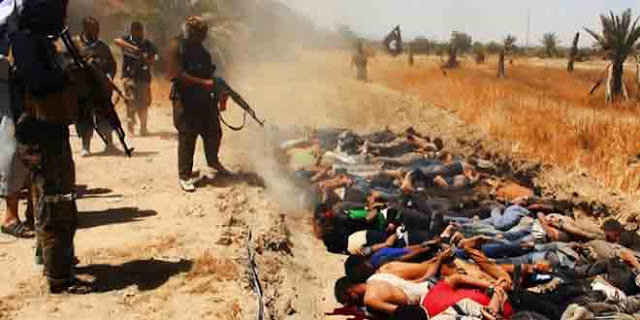
Iran massacre.
“Regarding MEK and all the militant groups, the ruling is the death sentence … Imam (Khomeini) has said this … their verdict is death sentence …” Ali Fallahian, the former Iranian intelligence Minister, said in an interview.
“Mr. Mousavi (Tabrizi) who was the Revolution’s general prosecutor used to say that there is no need for trial at all … it makes no sense that we try them … Imam repeatedly insisted that you should be careful not to let them go… Imam continuously stressed that you should always be cautious of this matter … Their ruling is always execution. This was his (Khomeini’s) verdict as the supreme leader, both before and after this event of 1988 (massacre of political prisoners),” Fallahian said in the interview referring to MEK members and supporters.
“First, you should bear in mind that their (MEK’s) ruling was death punishment; and if the religious judge did not sentence them (MEK) to death, his ruling has been illegal … so all of us should acknowledge that the verdict for a Monafeq [the term used by the regime to call a MEK member or sympathizer] is death sentence, this was both Imam’s fatwa and his verdict … there was a discussion about those who were supposed to be executed, but the executions did not carry out, and those who were to be executed but didn’t get a verdict. ‘Nonetheless’ why they were kept alive against Imam’s (Khomeini) will?” Fallahian said this, responding to a question about the victims of the massacres of 1988 who were serving their sentences.
Last August an audio tape of a meeting between the late Ayatollah Montazeri, the former successor to Khomeini, and the death committee was revealed. The audio tape shed light on the massacre. Mr. Montazeri called the massacre, “The utmost crime in the history of Islamic republic.”
“A full accounting of what’s called the ‘death commission’ created by Khomeini has yet to be carried out. But thousands died – by hanging or firing squad or in places such as Tehran’s Evin prison,” a 1990 Amnesty International report showed.
“We can’t progress as a world society unless we do something about the worst unpunished atrocity in modern society since the Second World War … , what happens when you let criminals go? What happens when you don’t prosecute? You have no deterrent effect, and the fact that the United Nations turned a blind eye towards this dreadful crime encourage them to go further,” said Sir Geoffrey Robertson, QC, former UN tribunal chief judge on Sierra Leone and prominent human rights barrister in his speech in Paris conference while discussing the 1988 massacre.
On the 29th anniversary of the massacre, Mrs. Maryam Rajavi, the president elect of the National Council of Resistance of Iran (NCRI) sent a message urging the UN High Commissioner on human rights to immediately set up an independent committee to investigate the 1988 massacre and subsequently put those in charge before justice.
Marking the 29th anniversary of this horrific purge, the time has come to hold the mullah’s regime accountable for crimes against humanity.

ماذا يفعل النظام الإيراني في العراق؟

تم التحديث:  11:18 03/11/2017 AST مشاركة تغريدة Email تعليق الحرس الإيراني بقناع الحشد الشع...