الثلاثاء، 15 أغسطس 2017

IRANIAN REGIME CRACKS DOWN ON MEK/PMOI


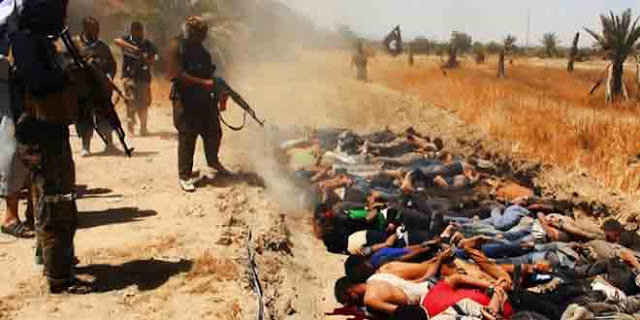
The growing movement calling for justice for the 1988 massacre of 30,000 political prisoners in Iran, has provoked the Iranian regime to attempt to discredit the movement.State-run Basij News recently wrote, “The People’s Mojahedin of Iran (MEK/PMOI) has organized the maximum propaganda and military activities against the Islamic Republic of Iran.
The unresolved issue is how some of the political circles support the MEK’s measures in the current situation and they question the events of the 80s, while trying to call the hangman a martyr.”
Leadership of the regime have criticized France for hosting the National Council of Resistance of Iran ( NCRI)’s annual “Free Iran” event. At “The Islamic Human Rights’ Conference”, Foad Eezadi stated, “France hosts Iran’s enemies, whereas it established economic relations with Iran after the Joint Comprehensive Plan of Action (JCPOA).” He added, “We had a lot of sanctions before the Iran Nuclear Deal. However, the question is that who is left out sanctions after this deal? According to this law, even the President could be sanctioned. The U.S. has enlisted us as the enemy country. Consequently, it doesn’t make much of a difference to give or not to give concessions as long as we are on this list.”
By discrediting the MEK, the regime hopes to discredit the movement. The MEK is seen as the foundation of the protests and domestic uprisings within Iran. The regime wants to confront the MEK, arguing that the regime’s unwillingness to discuss the massacre gives the MEK a foothold with the youth and others, because of the questions they raise.
Mohammad Sadeq Koushki, an international affairs expert in Iran, said, “We should have given people as much information about the MEK that there was no ambiguity about the executions in 1988.”
It appears that the regime is not able to obstruct the popular position of the MEK with the younger generation, although the state-run media, and lobbyists in the international community continue to try. The regime promotes outright suppression of the group. Even with these efforts, the MEK/PMOI continue their focus on the rights of the Iranian people and advocate for human rights and the freedom to express political opinions.
Films made about the MEK must reflect the views of the regime. Historically accurate films cause the filmmaker to be accused of being a supporter of the MEK. A filmmaker was quoted as saying, “Many people, even at the government level, go along with these deceptive slogans.”
The MEK/PMOI questions the actions of the Iranian regime. Their network within the country has exposed the actions of the regime to the international community.
Besides the MEK/PMOI, others who oppose the regime have built a coalition known as the National Council of Resistance of Iran (NCRI), which is the democratic alternative to the fundamentalism of the regime. They have developed a 10-Point Plan for building a free, non-nuclear, and democratic country to replace the regime’s fundamentalism and exporting of terrorism.

الاثنين، 14 أغسطس 2017

NEW SANCTIONS ON IRAN, NOW IT'S TIME FOR A NEW US POLICY TOO


By Alireza Jafarzadeh
On the second anniversary of the Joint Comprehensive Plan of Action (JCPOA), or the Iran nuclear deal, some argue that the agreement succeeded in slowing Iran’s progress toward a nuclear weapon. However, the restrictions on the Iranian nuclear program are only limited, as is the international inspectors’ access to the country’s illicit facilities.In addition, in areas unrelated to the nuclear agreement,
the Iranian regime’s behavior has only gotten worse over the past two years. The Islamic Revolutionary Guard Corps (IRGC), has escalated its nefarious activities in Syria, Iraq, and Yemen, has deliberately sought out close encounters with American warships, and has boasted of new Iranian military equipment.
Three ways to find the real deals on Amazon
Here’s some trivia for you: Amazon, the largest and most versatile…
 The White House’s efforts to enforce a harder line on Iran policy is well justified and the president’s signing into law of H.R. 3364, which included a title, “Countering Iran’s Destabilizing Activities Act of 2017” is a step in the right direction.
In June, the National Council of Resistance of Iran revealed details of the escalation of the Iranian missile program, proving the nuclear threat to be real. The opposition coalition identified more than 40 sites for missile development, manufacturing, and testing, all of which were under the control of the IRGC. What’s more, at least one of those sites was known to be collaborating with the Organization of Defensive Innovation and Research, known by its Farsi acronym SPND, the institution tasked with weaponization activities related to the Iranian nuclear weapons program. SPND activities have continued since the JDPOA.
Such revelations clarified what should already be common knowledge: Iran’s nuclear weapons activities have continued. Even worse, myopic focus on the nuclear issues has distracted attention from the Iranian regime’s terrorism sponsorship, regional intervention, and human rights abuses.
If the IRGC continues to acquire more wealth through its large-scale control of the de-sanctioned Iranian economy, combined with continued lack of access to the nuclear sites of SPND, Iran will undoubtedly deliver a nuclear weapon.
To its credit, the US. has taken steps toward addressing the underlying problem of the IRGC’s expanding control over Iranian affairs. Soon after taking office, Mr. Trump urged the administration to review designating the IRGC as a terrorist organization. With the new Iran sanctions bill now signed into law, the administration should expand all anti-terror sanctions to the whole of the IRGC, including its affiliate entities and associated financial and economic arms.
This is a meaningful start to a new Iran policy that is comprehensive in its aims and in its enforcement. Toward that end, the US should work with the UN and EU to evict the IRCG from the combat zones in Syria, Iraq, and Yemen. This will help protect the West and its allies, as well as empower the Iranian people, who are seeking regime change and are more than capable of bringing it about on their own.
Without serious sacrifice, Western powers must do their part. The Iranian regime must be more isolated and financially handicapped by the United States. It must also be subject to pressure not just over its nuclear program but also over a range of current and past crimes, including illicit missile testing, escalating regional and sectarian conflicts in the Middle East, and the 1988 massacre of political prisoners. The United States should subject all major human rights violators of the Iranian regime, including dozens involved in the horrific 1988 massacre of 30,000 political prisoners. Many of the perpetrators of this crime currently hold key positions in the Iranian regime.
These pressures will make a profound difference in the future of Iran, if coupled with reaching out to the people of Iran and their organized opposition. They will succeed in diminishing the power and influence of the IRGC; bolster the Iranian people and the prospect of the emergence of a truly democratic Iranian government. 
Alireza Jafarzadeh, the deputy director of the Washington office of the National Council of Resistance of Iran, is credited with exposing Iranian nuclear sites in Natanz and Arak in 2002, triggering International Atomic Energy Agency inspections. He is the author of "The Iran Threat" (Palgrave MacMillan: 2008). His email is Jafarzadeh@ncrius.org , and is on twitter @A_Jafarzadeh.
originally published in the   foxnews

السبت، 12 أغسطس 2017

CALLS FOR JUSTICE AND ACCOUNTABILITY FOR THE 1988 MASSACRE LEAD TO CRACKDOWN ON MEK/PMOI


As the movement for calling for justice in regards to the 1988 massacre of 30,000 political prisoners grows, the Iranian regime is fighting back in an attempt to discredit the movement. Recently, the state-run Basij News wrote, “The People’s Mojahedin of Iran (MEK/PMOI) has organized the maximum propaganda and military activities against the Islamic Republic of Iran. The unresolved issue is how some of the political circles support the MEK’s measures in the current situation and they question the events of the 80s, while trying to call the hangman a martyr.”
Various members of the leadership of the regime have also spoken out against France for hosting the National Council of Resistance of Iran (NCRI) annual event. “France hosts Iran’s enemies, whereas it established economic relations with Iran after the Joint Comprehensive Plan of Action (JCPOA),” said Foad Yazidi at a meeting entitled “The Islamic Human Rights’ Conference”.

He also noted, “We had a lot of sanctions before the Iran Nuclear Deal. However, the question is that who is left out sanctions after this deal? According to this law, even the President could be sanctioned. The U.S. has enlisted us as the enemy country. Consequently, it doesn’t make much of a difference to give or not to give concessions as long as we are on this list.”
The focus of the regime has been to discredit the movement by discrediting the MEK, which is seen as the backbone of the protests and domestic uprisings within Iran. Members of the regime argue that the state needs to confront the MEK, versus brushing them under the rug. Many argue that the regime’s unwillingness to talk about the massacre has given the MEK a foothold with the youth and others, because of the questions they are able to raise.
“We should have given people as much information about the MEK that there was no ambiguity about the executions in 1988,” said Mohammad Sadeq Koushki, an international affairs expert in Iran.
The regime seems unable to stop or derail the popular position of the MEK with the younger generation in Iran, despite all the efforts through the state-run media, lobbyists in the international community, and outright suppression of the group. Throughout these efforts, the MEK/PMOI have continued to focus on the rights of the Iranian people and advocate for human rights and the freedom to express a political opinion that is not in agreement with the regime.

Even within the regime, there is talk about how films about the MEK must reflect the views of the regime. If they are historically accurate, then the filmmaker must be a supporter of the MEK. One filmmaker was quoted as saying, “Many people, even at the government level, go along with these deceptive slogans.”
The MEK/PMOI has been a voice of political opposition, questioning the actions of the Iranian regime. Working with their network within the country, they have exposed the actions of the regime to the international community, making it clear that the regime can’t be trusted.

In addition to the MEK/PMOI, other voices in opposition to the regime have built a coalition, known as the NCRI. This group has become the democratic alternative to the fundamentalism of the regime. Their 10-Point Plan is the basis for building a free, non-nuclear, and democratic country in place of the fundamentalism and exporting of terrorism that is the regime’s bread and butter.

Tortured by 'Moderates'


Hassan Rouhani was sworn in for his second term as president of Iran on August 5, surrounded by fresh flowers, fervent followers, and around 500 foreign officials. Representatives of the United Kingdom, France, the United Nations, and the Vatican rubbed shoulders with the Syrian prime minister, Hezbollah second-in-command Naim Qassem, Palestinian Islamic Jihad leader and FBI Most Wanted Terrorists list member Ramadan Abdullah Shallah, and murderous Zimbabwean dictator Robert Mugabe. The Westerners didn’t seem uncomfortable in such company; indeed, European Union foreign policy chief Federica Mogherini was described as the star of the show after Iranian members of parliament elbowed through the crowd to take selfies with the diplomat.
But why should they have been bothered? They were in Tehran, after all, to celebrate the renewed rule of a man who has overseen a steady increase in killings—Iran has the world’s highest per capita execution rate. Three days before Rouhani’s inauguration, Amnesty International released a damning report on conditions in the country: “Iran’s judicial and security bodies have waged a vicious crackdown against human rights defenders since Hassan Rouhani became president in 2013, demonizing and imprisoning activists who dare to stand up for people’s rights.” The press release capping Mogherini’s visit didn’t mention the European-based organization’s report—or human rights issues at all—instead focusing on “the EU’s unwavering commitment to” the Joint Comprehensive Plan of Action nuclear deal. It’s unlikely Mogherini brought up the subject even in her private meetings: She was pictured smiling in multiple photo-ops with government officials.
A month earlier, a young Iranian woman told me how she and her fellow reformers feel when they see such images. “We know with every negotiation with this regime, every shaking hand with this regime, it means one more gallows in the streets,” Shabnam Madadzadeh said sadly. “They close their eyes to human rights in Iran,” she said of Westerners who deal with the regime and many members of the media who report on it. “They kill humanity, in themselves firstly, and after that in Iran.”
Madadzadeh speaks with a seriousness that belies her age. In a hound’s-tooth blazer, black pants, glasses with wine-colored frames, and a headscarf in shades of deep rose, the 29-year-old unfurled her passion in complete paragraphs. Her mustachioed and bespectacled 32-year-old brother, Farzad, wore a black suit and white shirt, sans tie. Intense but friendly, he continued his sister’s thought: “The biggest mistake that anybody can make when looking at Iran is to distinguish between Rouhani and [Supreme Leader Ali] Khamenei. If you just look at the law related to the elections in Iran, nobody can become president of Iran unless Khamenei has endorsed them. So whatever differences they have on one thing, they are united maintaining this regime, keeping it in power at any cost.”
It’s no surprise the pair project a certain depth. Shabnam and Farzad Madadzadeh spent five years as political prisoners in Iran. The siblings were tortured in front of each other and repeatedly threatened with execution. They fled the country: separately, illegally, dangerously. What is extraordinary is that after so lately enduring such horrors, never knowing if they’d make it out alive—and learning that many friends did not—they’re able not only to smile but laugh repeatedly in the course of a five-hour conversation. They were joined in the lobby of a Paris airport hotel by a fellow dissident, Arash Mohammadi. He had the same mustache as his countryman but wore a blue blazer, blue pants, and a blue checked shirt. He’s only 25 but can be as grave as the Madadzadehs. A jocularity comes through in his playful smile, however—even though he’s been jailed three times, enduring torture in each stint.
All three escaped from Iran recently: Shabnam less than a year ago, Arash about a year ago, and Farzad just under two years ago. And here they were, cracking up in mirth watching a YouTube video. They’d wanted me to see an example of the work of Mohsen, a comedian whose parodies make Pake Shadi the most popular program on a subversive satellite television network. He’s so famous in Iran that even prison interrogators mention his material. In this one, he inserted himself into state television footage of the funeral earlier this year of former Iranian president Hashemi Rafsanjani. Khamenei watches as Mohsen leads the crowd in a chant of mourning. In the front row, top regime officials—notorious thugs such as Islamic Revolutionary Guard Corps commander Mohammad Ali Jafari and Quds Force leader Qassem Suleimani—play up their grief for the camera. Mohsen intones, “Hashemi is waiting for us; let’s go” .  .  . to hell. The comedian notes that Rafsanjani, as a founder of the Islamic Republic, was buried next to longtime supreme leader Ruhollah Khomeini: “Now it is Khamenei’s turn!” In between laughs, the Iranians explain just how provocative the video is. “So in the middle of the mourning ritual, he starts dancing like that. It’s ripping all the taboos,” said Hanif Jazayeri, the men’s translator. “And this means that Hashemi is waiting for Rouhani,” added Shabnam, who speaks fluent English.
The video is a high-quality production and YouTube offers an English translation. But Westerners might need explication anyway: Rafsanjani and Rouhani are regularly referred to in the West, by politicians and the press, as “moderates.” The Iranians find that notion almost as hilarious as Mohsen’s satire. I read them a line from the recent election analysis of a major American newspaper: “Many Iranians gravitate toward Mr. Rouhani because of his relatively tolerant views on freedom of expression.” All three laughed heartily. But the talk soon turned serious.
“If there was freedom of expression in Iran, what are we three doing here? I mean, leaving behind your family is not easy, you know? We had to leave our university, our family, our best friends,” Arash said. When they do talk to people back home, they do so very carefully—contact with escaped dissidents could mean imprisonment for their friends and family. The trio did not want the exact dates of their escapes published, nor the location of their current homes, other than that they’re in Europe. The siblings don’t even live in the same city, for security reasons.
Iranian foreign minister Javad Zarif declared in a 2015 interview with Charlie Rose, “We do not jail people for their opinions. The government has a plan to improve, enhance human rights in the country, as every government should.” The PBS interviewer did not question these claims. Neither did the many friendly—almost gushing—reporters Zarif spoke with on his visit to the United States last month. Arash Mohammadi and Shabnam and Farzad Madadzadeh provide more evidence—if any is needed—that such statements are simply lies.
Shabnam and Farzad were arrested in 2009, before the uprisings over the suspicious reelection results of President Mahmoud Ahmadinejad that would turn into the Green Movement. They were seized on the street. Their family, not knowing what had happened, called hospitals to see if they’d been in an accident and searched for the pair for months. Shabnam was studying computer science at Tehran’s Tarbiat Moalem University and was a leader in the reformist student group Tahkim-e Vahdat. Farzad was a nonviolent activist and supporter of the resistance group People’s Mojahedin Organization of Iran (PMOI), best known in the West for revealing details of the regime’s theretofore hidden nuclear program. “I was 23 when I was arrested, and the torture started then,” Farzad recounted. He and his sister were held separately in solitary confinement for months. Questioning would begin around 8 a.m. and last 12 to 14 hours. “In each of the interrogation sessions, I was beaten. They wanted me to confess to crimes that I had not committed,” Farzad said. They wanted him to publicly renounce the PMOI (also called Mujahedin-e Khalq, or MEK) and the National Council of Resistance of Iran. “They told me, ‘You come and do an interview against the PMOI, the MEK, and the NCRI,’ ” he said. “They would throw me on the ground and treat me like a football between three people. .  .  . Several times they did this to me in front of Shabnam’s eyes in order to break her.”
His sister will never forget her own months in solitary confinement. “The interrogator told me, ‘Okay, nobody can hear you. We are alone here, and we can do everything we want.’ ” She could regularly hear the voices of other prisoners being tortured; some later told her they had been raped. She was tortured herself, and the only time she could see her brother was when they brought him to be tortured in front of her. Even after she left solitary confinement, she was often deprived of the few visits allowed with family because she told them about the appalling conditions of the prisons and the gruesome treatment of prisoners. Four people would share a cell, with three thin blankets each to sleep on; windows would be left open even in winter. Captives were taken to use the bathroom just three times a day, and not at times of their choosing. Having to hold it in gave Shabnam serious medical problems. “About 11 months to a year after our arrest, there was a trial. For five minutes, it lasted,” Farzad said. They were both given five-year sentences and moved from Evin Prison to the even harsher Gohardasht Prison.
“Many of my friends during this period that I was in prison, they were executed. Some of them, they died in front of my eyes because of the illnesses they had or because they were tortured so much and because of their conditions they died in front of me,” Farzad reported. He can rattle off the names of friends executed after death sentences. “Ali Saremi. Jafar Kazemi. Mamadali Hojari. Farzad Kamangar. Farhad Vakili.” Mohsen Dokmechi died of pancreatic cancer after jailers refused him medical treatment.
He expected the same fate. “I remember the moment that I was arrested, taken to the car, and I was in front of the door of Ward 209 of Evin. I told myself, ‘You’re going in here, but you’re not coming out of here.’ Because I knew where I had come. Because I had heard what happens here.”
While the siblings each served one long sentence, Arash had multiple shorter stints in prison: He was arrested twice under President Ahmadinejad and once under President Rouhani. He was a 19-year-old studying industrial management at Tabriz University when he started gathering with other students concerned about the plight of workers in the country, especially children (factory work can start at ages as young as 6 or 7, and drug addiction with it). “If somebody just goes and walks down the streets for 10 minutes, maybe they would see a hundred kids working on the streets,” Arash said. Besides toiling in factories, children sell small items: chewing gum, socks, even “luck poems,” often randomly chosen excerpts from the work of 14th-century Persian poet Hafez. “If they don’t work, they will be starving,” Arash said. “When the government rounds them up and arrests them, instead of assisting them, helping them with their problems, they take them” to juvenile correction facilities, where the conditions can be worse than on the streets. “They are even raped there, in those centers.” He knows of a 9-year-old girl who worked in a sewing factory who underwent such trauma.
“The main problem is that the Iranian government actually doesn’t even acknowledge that such a problem exists,” Arash said. Calling attention to it was an implicit criticism of the government. “Although we were campaigning for children’s rights or worker’s rights, they would charge us for things like insulting the supreme leader, insulting the sanctities, and things that nowhere in the world is a charge,” he said. “Because the Iranian regime, they want to say that this is the best place on earth. Neither during our time in prison, neither now, the regime does not accept that it has political prisoners.” Arash was taken from his home at 5 a.m. “They told my family, ‘We have to speak to him for about an hour, then he’ll come back.’ ” He spent a couple of weeks in solitary confinement and was sentenced to a year in prison. “They constantly brought a paper in front of us and said, ‘Either you have to answer these questions like this, or you’re going to be executed.’ ”
He was next arrested after trying to aid victims of the 2012 earthquakes in the Iranian province of Azerbaijan. “The government didn’t want people to know what had happened there,” Arash said. It wasn’t the natural disaster the regime was trying to hide. “There were a number of villages that didn’t have even the basic of facilities like electricity, water,” he reported. “The IRGC, the Revolutionary Guards, had come there and they had closed off the routes to the villages.” Dozens of people were arrested for trying to help victims and locate survivors trapped under the rubble.
“The primary thing of importance for the regime is for the people not to become alert as to the problems that exist there. That’s their number-one priority,” Arash said. “It’s 100 percent a danger as a threat to the regime because it’ll become clear that for 38, 39 years, this government has done nothing for the people.”
Arash was detained yet again the day after Rouhani was announced the winner of the 2013 presidential race. “During his election and campaigning, he had promised to free all political prisoners. And so as soon as it was announced, we went in front of his campaign headquarters, and we started to chant, ‘All political prisoners must be freed,’ ” Arash said. He quickly became one himself.
That third stint in prison was the final straw. He realized that if he didn’t leave the country, he’d eventually be sentenced to death. Farzad and Shabnam also made the difficult decision to flee. “When I was released from prison, immediately a lot of problems started to come about, and I was being followed and being monitored,” Farzad said. “I couldn’t work. I couldn’t get by, live.”
Shabnam had the same experience. “When I was released, they didn’t allow me to continue my studies. They didn’t allow me to have a job.” She still worries about her female friends, especially, “under the clutches of the misogynistic regime.”
Recalling why he left his homeland reminded Arash why he started fighting for its freedom in the first place.

We are some youth, and naturally no youth want to see hardship. The youth of Iran are just like the youth in America and Europe. They want the same things. But when we reached a certain age, we looked around us and we saw that there are some things are happening, and people are being killed in the streets. People are being hanged in the streets. We also knew that in this regime, for the past 38 years there has been a current, a faction, that constantly says, “We’re reformists, we’re reformists.” But we saw that there was no reform. So we realized that the dictatorship needs to be overthrown.
And that is the heart of the matter: Western diplomats may pretend otherwise, but the government over which Hassan Rouhani presides is a dictatorship.
“As far as I’m concerned, you can’t say that one dictator is better than another dictator,” Arash said. “I was lashed in prison. For me, it did not make a difference which government’s agents were lashing me. But the pain of the lashes by Rouhani’s government were for me more painful. Because during the Ahmadinejad administration, everybody accepted it: Ahmadinejad was a dictator. But during Rouhani’s time, I felt, I saw these lashes on me, but the West did not accept that was going on. So it was much more painful for me.”
Of course, the West also sometimes found it convenient to pretend that Ahmadinejad was no dictator. Farzad recalled being in prison in 2009 when an influx of inmates arrived. Arrested supporters of the fledging Green Movement told him of their cries: “Obama, Obama, are you with them or with us?” “In Farsi, this rhymes, so it was a slogan that was chanted in the streets. But what did Obama do? Obama secretly brought a letter to Khamenei. .  .  . This was while people were being killed in the streets,” Farzad said. “The policy of appeasement exists. Because some people have vested interests.”
That is a succinct summary of what Iranian freedom fighters would like from the West: an end to the policy of appeasement. “I interpret the Iranian regime like a statue, like this bottle here,” Arash said, grabbing a one-liter glass bottle of Pellegrino on the table. “I believe the foundation of this regime has been destroyed by the resistance.” He made a digging motion underneath the bottle with one hand; with the other, he started shaking the bottle back and forth slightly. (It seemed a particularly Persian analogy: Engineering rivals poetry in popularity in Iran.) He has seen the cracks himself, giving the example of conversations in taxicabs. In Iran, no one has enough money to ride alone. “When there are two, three people in a car, they are so aggravated by the regime that they start to curse,” he said. (He was too polite to report exact wording.)
Back to the bottle: “But from the top, the appeasing governments in the West have tied a string to it to not let it fall down and shatter. So 100 percent, those who are holding onto this string and keeping it there are responsible for their role in it.” He is quick to point out that it’s not just Iranians such a policy hurts. “For example, when Rafsanjani was president and Rouhani was the secretary of the Supreme National Security Council, the West kept on saying that this government is a moderate government. But it was the same government that went into Argentina and exploded the Jewish center. So this shows that when this regime is appeased, it does not just cause suffering for the Iranian people. This evilness is exported.”
They point to the Joint Comprehensive Plan of Action nuclear deal the West signed with Iran in 2015 as a prime example. “This agreement, it gave far more concessions than were necessary to this regime. They put the money—cash—in an airplane. They sent it to Iran,” Farzad pointed out. “None of that money reached the Iranian people. It reached Assad, Hezbollah.” The Iranian government received $1.7 billion directly through the deal. It will see billions more through deals the agreement has made possible: Boeing, Airbus, Renault, Total S.A., and Siemens AG are just some of the American and European companies lined up to do business with the mullahs.
That agreement was the prime focus of President Obama’s foreign policy and the reason he wrote private letters to the supreme leader, but of course Donald Trump is in power now. The three dissidents were in Paris in July for an annual gathering of members and supporters of the National Council of Resistance of Iran. Well over 100,000 people filled a stadium near Charles de Gaulle airport to listen to speakers from all over the world, including some Americans: former U.N. ambassador John Bolton, former senator and vice presidential candidate Joseph Lieberman, and Trump confidant Newt Gingrich. Throughout the weekend in Paris, from activists and their supporters alike, rang a refrain not often heard in Washington: optimism about the Trump administration. Most people were quick to note that they don’t support all or even many of the president’s policies. But they saw his tough talk about the nuclear deal during the election as a sign his Iran policy would be very different from his predecessor’s—perhaps even a “180-degree” turn, more than one person said.
The administration is conducting a review of Iran policy, which it plans to finish by summer’s end. Some pundits worry that it will make “regime change” the new goal of the United States. That’s precisely what these Iranian dissidents are hoping for. But, contrary to the assumptions of some supposed experts in Washington, “regime change” doesn’t have to be by military force.
When asked if they’d like to see America crush the Islamic Republic using bombs and tanks, all three immediately shook their heads and emphatically said no. Iranians can overthrow the theocracy from within, they insist—if the West ends the aid and comfort that allow it to hold onto power. “Definitely we have requests. We request that the West stop supporting this dictatorship,” Arash concluded. “Based on the tally that this regime has given, every day approximately three people are hanged in Iran. So for every extra day that this regime is in power, more blood is spilled in Iran. So if the U.S., and the West in general but in particular the U.S., retracts the support that they have given this regime, definitely both the people of Iran will achieve freedom sooner and fewer lives will be lost.”
All they’re asking, in other words, is that the West let go of the string that’s holding up the teetering regime.
Kelly Jane Torrance, deputy managing editor of The Weekly Standard, traveled to Paris as a guest of the Alliance for Public Awareness, apa-ice.org.

الجمعة، 11 أغسطس 2017

اليوم السابع.. المعارضة الإيرانية: حكومة روحانى الجديدة حفنة من الجلادين ومصدرى الإرهاب


كتبت إسراء أحمد فؤاد
علقت منظمة 'مجاهدى خلق' المعارضة الإيرانية بالخارج على التشكيلة الوزارية الجديدة للرئيس الإيرانى المنتخب لولاية ثانية حسن روحانى، قائلة إن 'تشكيلة الحكومة الجديدة حفنة من عناصر الحرس الثورى ومختطفى الرهائن، ومحترفى التعذيب والجلادين ممن لعبوا أكبر الأدوار في الحرب وأعمال القمع والمجازر وتصدير الإرهاب والتطرف وقتل شعوب المنطقة'.
وأضافت المعارضة الإيرانية بالخارج، فى بيان صادر عنها، اليوم الخميس، أن روحانى لا يريد ولا يستطيع إحداث تغيير جاد فى أسس ومبانى هذا النظام المتخلّف العائد لعصور الظلام وتصرّفاته، وقالت إن أحد الأعضاء الجدد فى تشكيلة روحانى الجديدة هو محمد جواد آذرى جهرمى، وزير الاتصالات وتقنية المعلومات، جلاد عمل منذ أن كان عمره 21 عاما فى وزارة المخابرات، وشارك فى الاستجواب والتحقيق والتعذيب والرقابة، وتم تعيينه فى الانتفاضة عام 2009 ليعمل مساعدا لوزير المخابرات فى الشؤون التقنية والمدير العام للتنصت فى الوزارة لغرض السيطرة وقطع الاتصالات للثوار، كما لعب دورا خاصا بتوسيع قسم التنصت فى اعتقال المتظاهرين وقمع الانتفاضة، على حد قولها.
وبحسب المعارضة الإيرانية، فإن روحانى يحاول عبر قراره بتعيين 'آذرى جهرمى'، الحيلولة دون توسع نفوذ المقاومة الإيرانية داخل المجتمع، إضافة إلى وزير الدفاع الجديد الذى قالت المعارضة إنه مجرم باسم 'أمير حاتمى' الذى عمل فى 'الباسيج' نشطا منذ بداية حكم الملالى، وكان عمره 12 أو 13 سنة وقتها، وشارك فى أعمال القمع والقتل، حسب ما كتبته وسائل الإعلام الحكومية، فهو من ميليشيات 'الباسيج' والحرس الثورى الذين أدخلهم النظام فى الجيش، ليستطيع فرض السيطرة الكاملة عليه، ولهذا السبب حصل بسرعة على درجات الرقى فى الجيش، ولعب دورا نشطا فى أعمال القمع واعتقال وإعدام منتسبى الجيش الثوريين الوطنيين.
وأضافت 'مجاهدى خلق' فى بيانها، أن 'حاتمى' لعب دورا نشطا فى مواجهة المجموعة وكان له 'حضور نشط وفاعل فى محاربة المجموعات المعادية للثورة ومجاهدى خلق والفرق المتسللة فى المناطق العملياتية شمال غرب وغرب البلاد'، ولهذا السبب قدم خامنئى له شهادة تقدير، وفى 1998 وبينما كان عمره 32 سنة، ارتقى درجتين بأمر من خامنئى، لينال رتبة العميد، وتم تعيينه مساعدا فى شؤون الاستخبارات فى القيادة العامة لجيش النظام.
كما كشفت المعارضة، عن أن حبيب الله بيطرف، وزير الطاقة الجديد فى تشكيلة روحانى الحكومية، كان عضوا فى اللجنة المركزية السداسية لطلاب سالكى نهج الإمام، ومن مسؤولى احتلال السفارة الأمريكية فى العام 1979 واحتجاز دبلوماسييها، وأنه كان من المنظمين الأوائل لجهاد البناء وعضو قوات الحرس الذى لعب دورا فعالا فى الحرب الخيانية وقتل الشباب والأطفال الإيرانيين.
وقالت المنظمة أيضا فى بيانها، إن محمد شريعة مدارى، وزيرالصناعة والمعادن والتجارة، عمل منذ بداية حكم الاستبداد الدينى فى أعلى مستويات المسؤولية عن ممارسة القمع والنهب، ولعب دورا نشطا فى تشكيل وتنظيم مؤسسة 'لجان الثورة'، وكان من مؤسسى وزارة المخابرات وتم تعيينه مساعدا لهذه الوزارة فى العام 1984، كما يحمل فى سجله العمل فى قسم الإشراف والمحاسبة فى مكتب خامنئى

الثلاثاء، 8 أغسطس 2017

ANALYSIS: How to tackle Iran’s Middle East bellicosity


Thanks to years of Western appeasement in the face of Iran’s belligerence across the Middle East, evidence of Tehran’s dangerous footprints are now visible in several countries across the region, including even Saudi Arabia’s Eastern Province.
The Trump administration, however, has made it quite vivid its adoption of a firm approach. This stance, signaled in the historic May conference in Riyadh, is long overdue and should be enhanced by Washington supporting the Iranian people’s desire for regime change.

A history of devastation

Iran has a long record of hostility against neighboring countries and US interests in the Middle East. The 1983 bombings targeting the US Embassy and barracks in Beirut, the Khobar Towers attack in 1996, all climaxed in the support Iran provided for Shiite proxies and the Sunni Taliban in their campaign against US-led coalition forces in Afghanistan and Iraq.
In parallel form, the Lebanese Hezbollah and Hamas, two known terrorist groups, have for over 30 years enjoyed contributions from Tehran to fuel sectarianism throughout the Middle East and carry out terrorist attacks.
The Obama administration handed Iraq over to Iran in a silver plate through a strategic mistake of prematurely pulling out all US troops. This paved the path for Iran to further export its “revolution” through a convenient medium of extremist proxies.
The West can literally be accused of standing aside and watching Iran’s aggressive policy. This has rendered a slate of countries, including Afghanistan, Bahrain, Iraq, Saudi Arabia, Syria and Yemen feel threatened and/or left utterly devastated from Iran’s meddling on their soil.

Troubling activities

Of late, Iran has been reported to send further weapon
s and narcotics to Yemen’s Houthis. These drugs are sold to provide income for Iran’s supported militias on the ground in the flashpoint country south of Saudi Arabia, Tehran’s archenemy in the region.
Members of Iran’s Revolutionary Guards (IRGC) are present in Yemen also to instruct and guide the Houthis in assembling weapons smuggled into the country by Tehran.
“For the last six months the Islamic Revolutionary Guards Corps (IRGC) has begun using waters further up the Gulf between Kuwait and Iran as it looks for new ways to beat an embargo on arms shipments to fellow Shi'ites in the Houthi movement,” Reuters cited Western and Iranian sources.
“Using this new route, Iranian ships transfer equipment to smaller vessels at the top of the Gulf, where they face less scrutiny. The transshipments take place in Kuwaiti waters and in nearby international shipping lanes, the sources said.”
The Iranians are also taking provocative measures against the US Navy in the same region recently, viewed by analysts as actions to learn the limits of US President Donald Trump. On July 26th an armed Iranian patrol boat closed within less than 150 meters of the USS Thunderbolt, yielding back only in response to warning shots fired by a US Navy ship.
Such developments are reasons why Trump contacted his French counterpart Emmanuel Macron “to explore how to increase cooperation in addressing the ongoing crises in Syria and Iraq and countering Iranian malign influence,” according to a White House readout.

Positive steps forward

Despite the utterly wrong decision of EU foreign policy chief Federica Mogherini visiting Tehran for Iranian President Hassan Rouhani’s inauguration, the Trump administration is sending push-back signals and making Iran learn its aggressions will not go without cost.
This is a necessary and welcomed shift in Washington’s foreign policy.
President Trump has signed into law a strong bipartisan Congressional initiative imposing strict sanctions on Iran, Russia and North Korea. The IRGC is now considered a Specially Designated Global Terrorist group. Considering the Guards’ control over at least 40 percent of Iran’s entire economy, this raises the stakes for companies considering doing business with Tehran.
It would be wise to reconsider investing in Iran’s $400 billion economy and ponder placing one’s bets in other regional countries, or say, the United States’ $19 trillion establishment.
And in news that most certainly raised eyebrows in Tehran, Iraqi Shiite cleric Muqtada Sadr visited Saudi Arabia recently and called for the controversial Iran-backed Popular Mobilization Units in his country to be dissolved now that the Islamic State has been defeated.

The nuclear deal

High hopes were placed in the nuclear deal sealed between the P5+1 and Iran, which Obama hoped to leave behind as his foreign policy legacy.
Two years down this road it has become vivid that Iran’s behavior has not changed, to say the least. In fact, Tehran’s support for Hezbollah and other extremist entities have escalated. Iran’s role in the Middle East, namely Syria, Iraq and Yemen have been horrifically destructive.
The Trump administration can lead the international community in instituting the first real and effective initiative against the Iranian regime.
Any trade with Tehran should hinge on:
- the regime halting all executions and human rights violations,
- withdrawing their forces from Syria and Iraq, and severing any ties and support for terrorist groups,
- completely stopping missile activities, especially ballistic missile production and tests,
- ending all nuclear initiatives and providing true “anytime, anywhere” access to all suspected sites, including military facilities.
Moreover and parallel to recent sanctions, which must be executed immediately and without any loopholes, the Iranian people’s organized opposition, resembled in the National Council of Resistance of Iran, should be recognized. This will pave the path for regime change by this coalition without war or military intervention.

الاثنين، 7 أغسطس 2017

ANALYSIS: Are sanctions on Iran a sign of shifting US policy?


Disclaimer: Views expressed by writers in this section are their own and do not reflect Al Arabiya English's point-of-view.
The enactment of a comprehensive sanction bill and designating the Iranian Revolutionary Guard Corps (IRGC) as a Specially Designated Global Terrorists (SDGT) by US lawmakers targeting Tehran’s military and terrorist arm, is a significant signal of shifting US policy in reaction to Iran’s destabilizing role in region. The regime is beginning to realize that the Obama era is over.
This alteration in US policy acts as a catalyst and facilitator of change inside of Iran. However, the main factor and grass roots of change are inside Iran.
This pivot point for a policy change has an accelerating role and is influenced by the ineradicable behavior of the Islamic Republic and on the other hand the will of people’s resistance to achieve in such policy.
Now, the question remains on the Iranian regime’s reaction and choice of direction to the new sanction bill. In such crises, the Iranian regime has a track record of buying time (delaying tactic) and taking one step forward and one step backward, as witnessed in previous nuclear negotiations.
If Obama’s policy of appeasement and concessions was decisive, Tehran would have been forced to step further back from their evil approach. But this did not happen, and the regime was constantly revived through newly provided funds and sanction relief. Instead, Tehran expanded its destabilizing role and terrorist activities in the region.
The adoption of new sanctions so far has put Iran in a shocking stage. If these sanctions are seriously applied and extensively implemented, Tehran will be pinned to make an ultimate decision.

Retreating or challenging

Iran faces widespread and profound social dissatisfaction, parallel to economic insolvency and serious crises. It understands the language of force and lacks the ability to challenge. The most likely option for Tehran is to kill time and continue delaying.
To prevent the regime’s highly cheating skills, the best policy is to enforce and maximize pressure. Tehran is a fundamentalist and rebellious regime without any legitimacy. It is incapable in changing its behavior. According to Iranian Supreme Leader Ali Khamenei, changing the regime’s behavior will ultimately bring the regime down.
Therefore, there will be no transformation or reform from such a regime. The Iranian people are keen towards overthrowing this regime and the comprehensive and extensive sanctions on IRGC is aligned and in support of their will for regime change.
The social conditions in Iran have come to a boiling point and the opposition movement has the potential and an upper hand. The path forward is social rebellions to overthrow this regime.
During the 2009 uprisings Iranians were chanting: “Obama, Obama are you with us or the mullahs?,” as they called in vain for international support.

The policy shift

The Iran policy shift has its effect inside the regime and they have been vocal about it. In this regard the “Resalat daily”, regime’s controlled paper, in its July 31, 2017 issue, pointing to the change in the international affairs towards the Iranian regime states: “Behind the sanctions belies a boycott campaign. There will be an overthrowing in a soft, sophisticated and silent way,” a recent piece in the state outlet Resalat daily reads.
Ahmad Jannati, Chairman of the Guardian Council, also raised deep concerns. “[Khamenei’s] most important concern is the fear of overthrow,” and “the enemy is seeking regime change from within,” he said.
Iran won’t have the same fate as Iraq and Syria since there is an organized democratic and powerful opposition. This alternative is the National Council of Resistance of Iran, a democratic platform which the People’s Mojahedin Organization of Iran (PMOI/MEK) is the main force. On July 1st the NCRI demonstrated its strength and abilities by gathering hundreds of thousand supporters in Paris, all seeking regime change in Iran.
The NCRI demands a boycott in international diplomatic and economic relations and expelling Iranian regime representatives from international assemblies. The IRGC and affiliated proxies must also be evicted from the region.

The appeasement policy

On a side-note, the Iranian regime feeds off its lobbies’ propaganda and advocates promoting yet again the appeasement policy, aimed at justifying and legitimizing beneficial relations with Iran. The regime’s lobby argues the international community should cooperate with Tehran as there is no alternative other than war. This absurd propaganda is promoted while the IRGC has been in war in Syria, Iraq, Lebanon and Yemen.
In same regards, US Secretory of States Rex Tillerson recently insisted on cooperation with Russia to tackle terrorism and end the Syria war.
“Iran’s military influence, the direct presence of Iranian military forces inside of Syria, they must leave and go home, whether those are Iranian Revolutionary Guard forces or whether those are paid militias, foreign fighters that Iran has brought into Syria” he said.
All evidence shows the only path to peace and stability in Iran and the Middle East is to support the NCRI and pressure Tehran through extensive sanctions.
The NCRI issued a statement welcoming the new law imposing sanctions against Iran and the Revolutionary Guards, emphasizing its immediate implementation meticulously without exception.
Furthermore, NCRI President-elect Mrs. Maryam Rajavi underscored these sanctions must be implemented immediately against all individuals and entities involved in executing and torturing the Iranian people, especially those directly involved in the 1988 massacre of over 30,000 political prisoners.
Rajavi also emphasized that the people’s right of resistance for regime change must be recognized. She also views these collective ultimately resulting in stability and peace in the region.

ماذا يفعل النظام الإيراني في العراق؟

تم التحديث:  11:18 03/11/2017 AST مشاركة تغريدة Email تعليق الحرس الإيراني بقناع الحشد الشع...